EIL
15 posts in EIL.
August '26 - Everything I Learned
Previously: EIL August ‘26
August became an unexpectedly least physically active month. I broke my leg and had to slow down for at least a month, which left plenty of time for documentaries and my old archives.
Famous painter from a small town: Ivan Rabuzin
During a karate camp in Croatia (end of September), between trainings, I visited the home of Ivan Rabuzin, the internationally known painter from a village near Novi Marof. I love it there around Novi Marof.
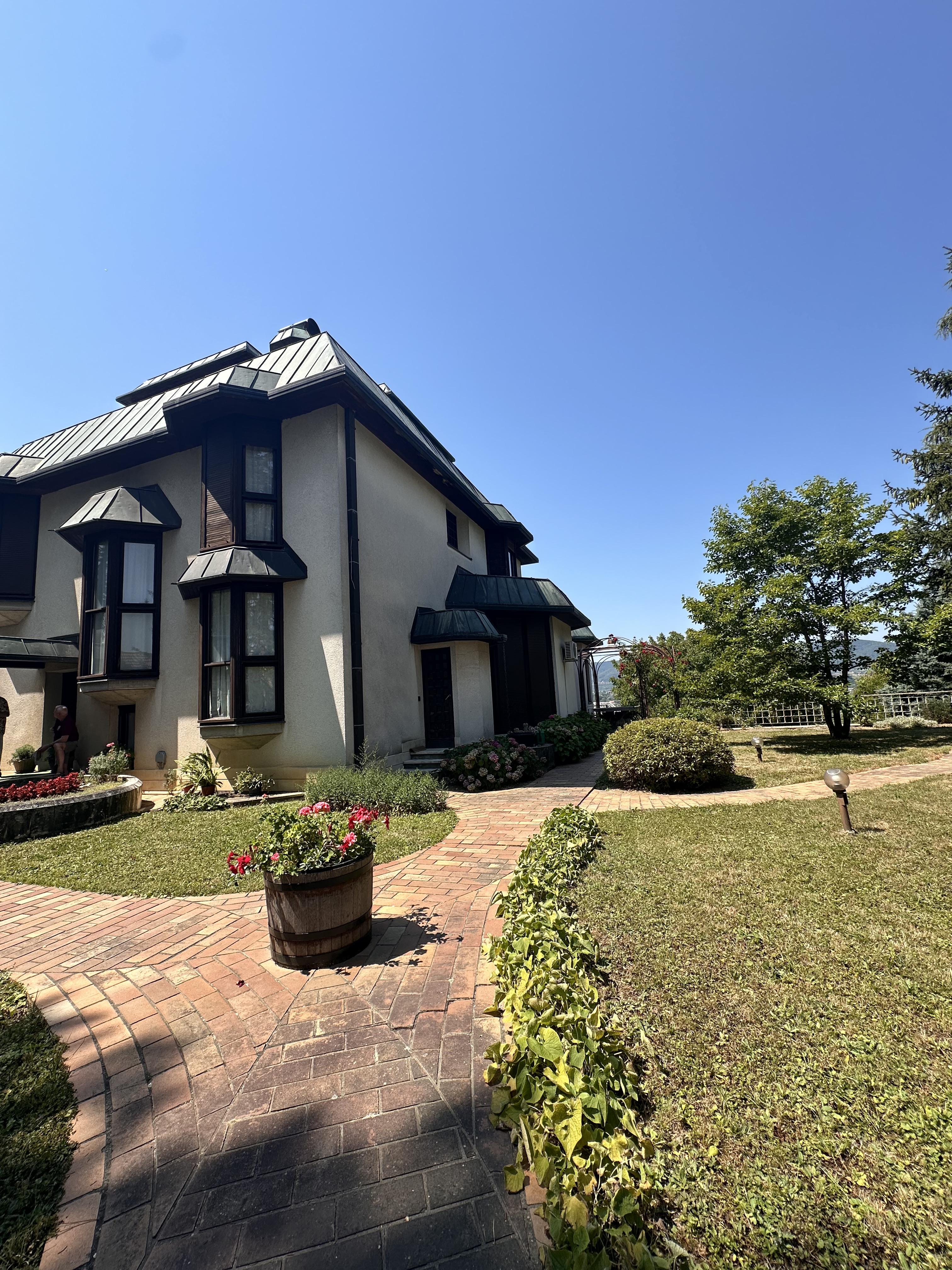
Ivan Rabuzin is long gone and his son-in-law is working to preserve his house as a museum.
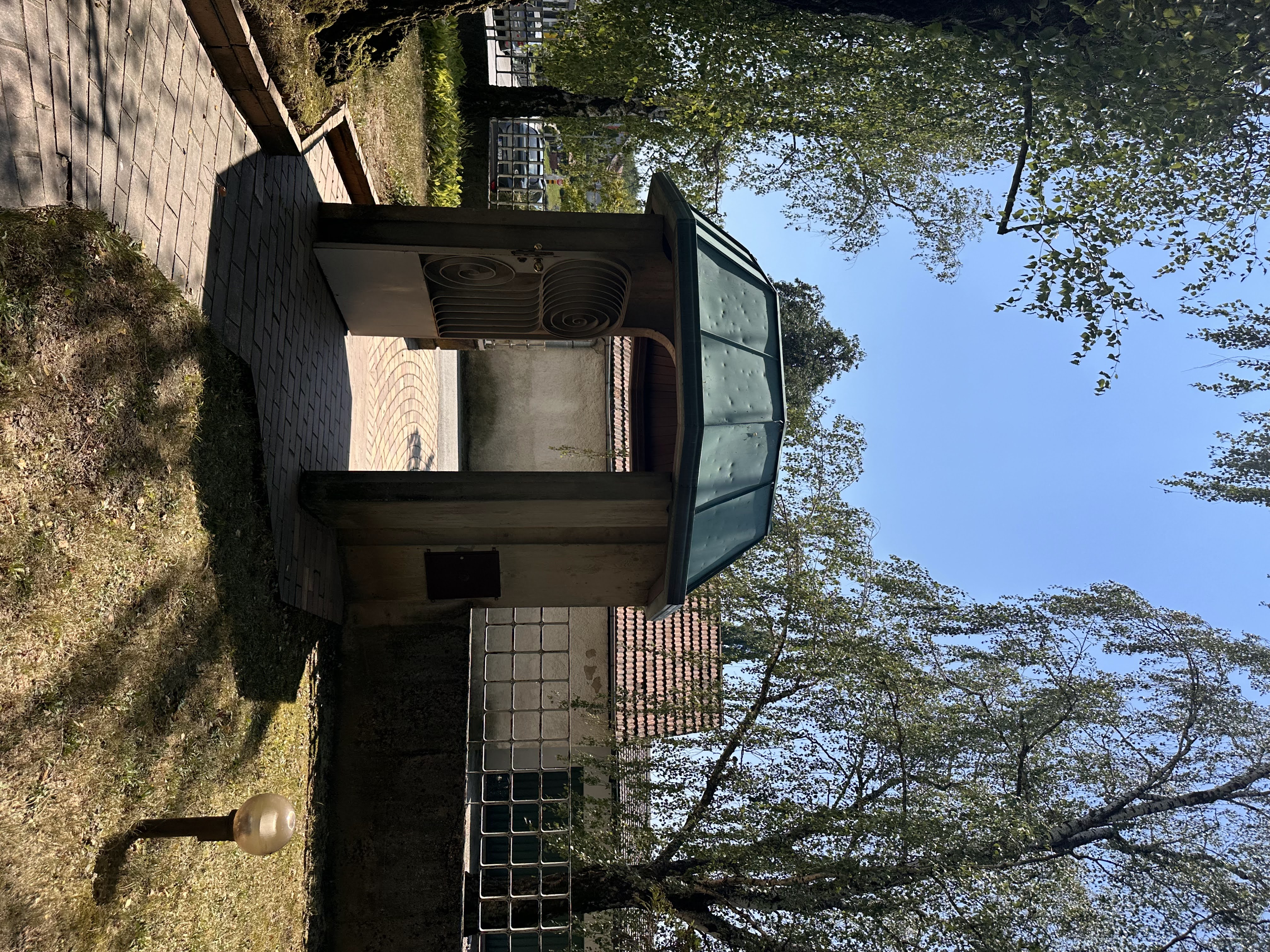
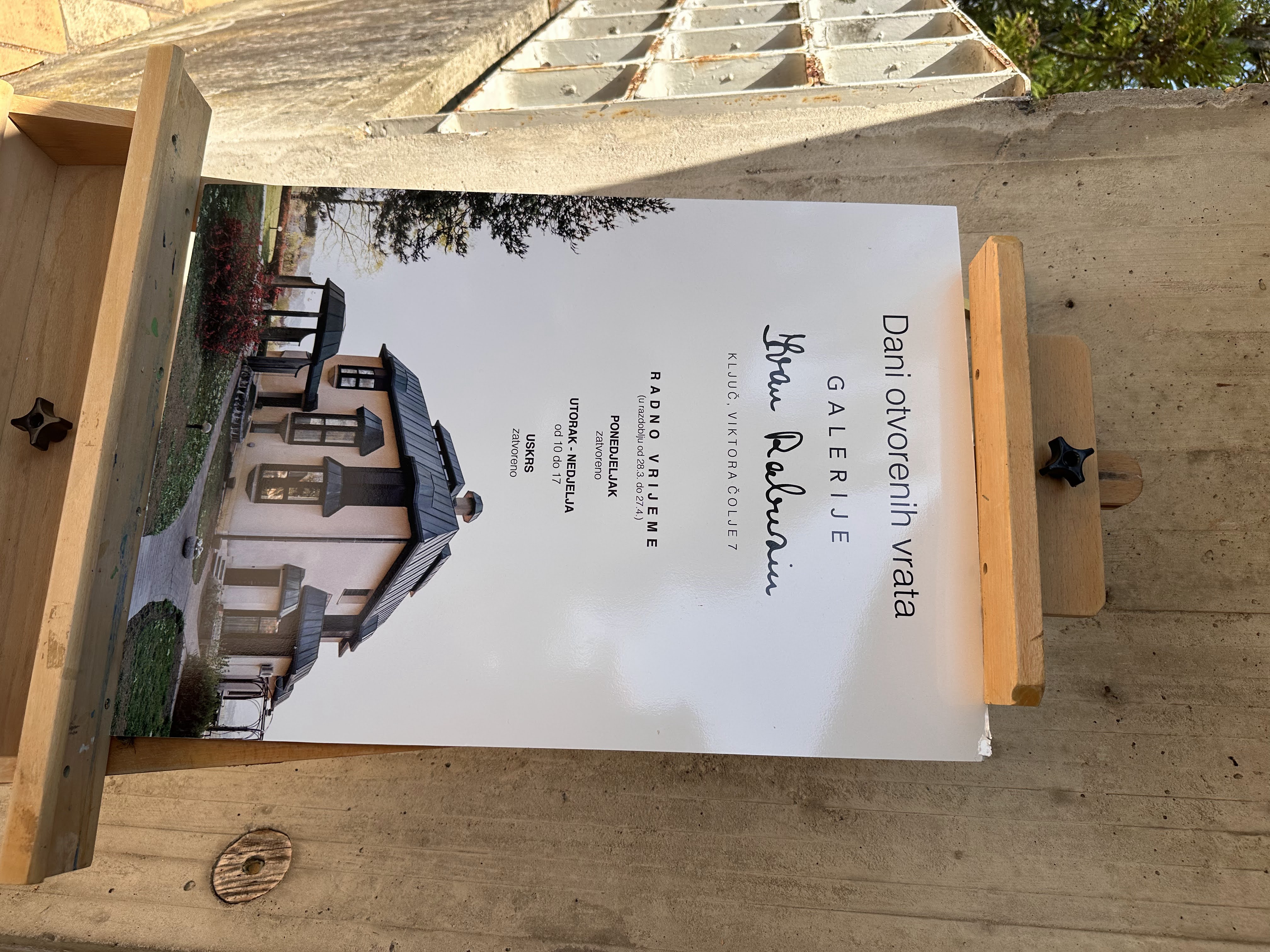
Rabuzin began as a dishwasher, learned carpentry, then turned to painting. A quick summary I learned from his son in law. I learned too many other things. They try to make the house a museum. He showed Ivan’s one of the early works was reportedly used as a chicken feeder before his work became famous. His paintings later found an audience as far away as Japan, where one was used as a theatre curtain.
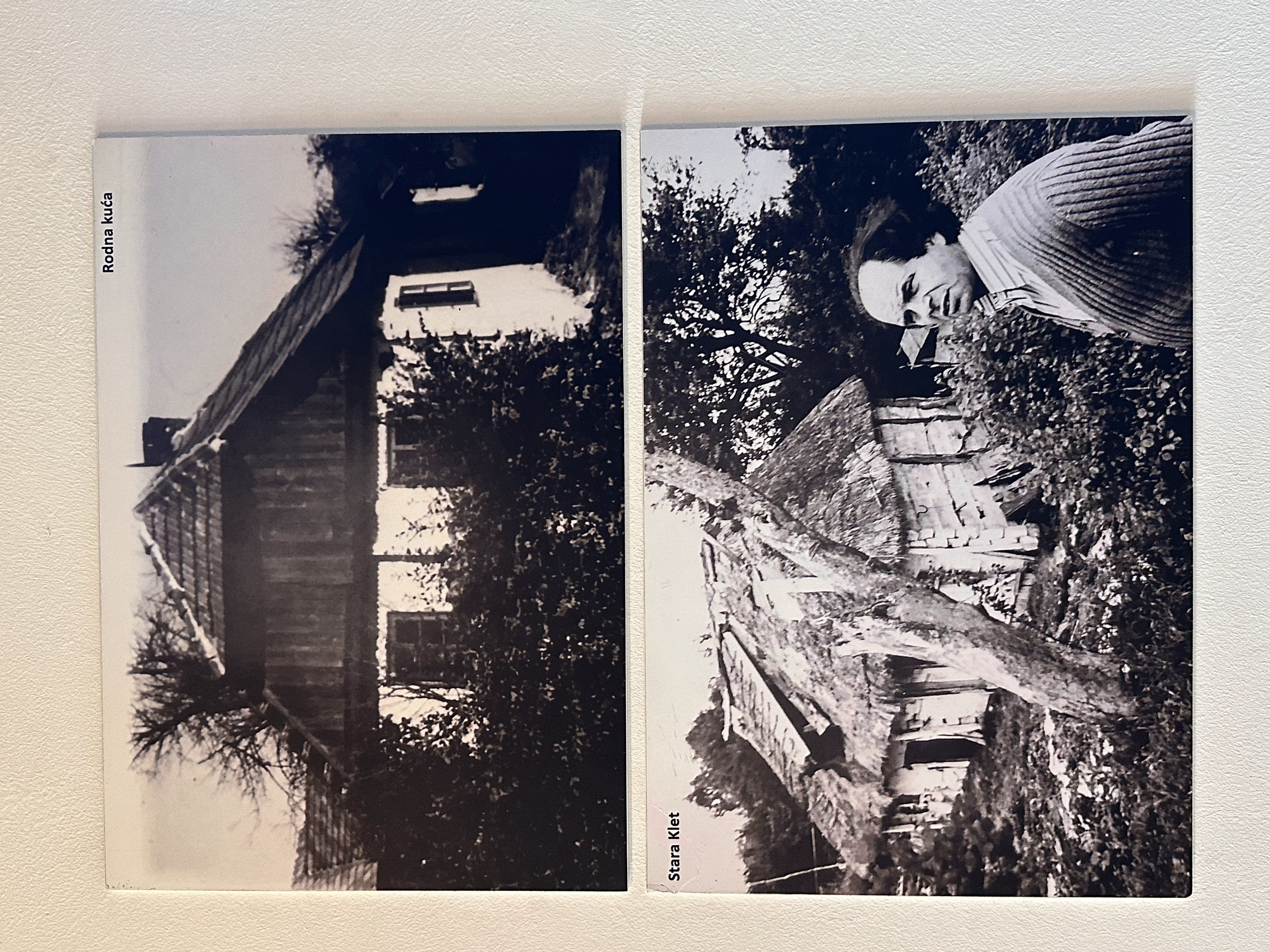
Rodna kuća - the birth house - and Stara Klet, the old cellar, before the museum took shape.
The house is as interesting as the paintings. Rabuzin helped design it and made its furniture himself: chairs, cradles, benches, too many plates and ceramicware, and a huge dining table. It reminded me of the distinctive private architectural projects of old Ankara. The house also has spectacular but humble details to show the craftsmanship.

I started loving his unique style. Check out his work https://marilyncvitanic.substack.com/p/the-art-and-inspiration-of-ivan-rabuzin
Later in the area we have realized that there are his art work on top of the plastic water bottles as well. Apparently the water company made a deal during the socialist years for one time purchase of the usage rights from Rabuzin and still using that contract.
At the garden of the house there was a metal installation looks like a very big burnt match stick.

Barkley Marathon
I started watching documentaries a lot while recovering after my broken leg surgery. Among others this one was interesting. A docu about Barkley Marathon. I love the obsessed amateur spirit, ambitious community and hard trail and along all the fun historical elements that built the trail. The founder is himself has a great smile during the entire documentary. It was a feel good documentary for a person with broken leg in recovery :)
https://www.mattmahoney.net/barkley/
From the website:
The Barkley is considered one of the toughest “100 mile” races in the world. It has (67000 feet) 20 km of climb (and 20 km of descent), more than any other 100 mile race, more than the 33,000 ft. of climb at Hardrock, and more than the 45,000 ft. at Nolan’s 14. Since the race began in 1986, less than 2% of runners have finished within the 60 hour cutoff. Mark Williams of the UK finished first in 1995 in 59:28. Here is his race report. In 2001, after several failed attempts, Blake Wood, 42, NM, and David Horton, 50, VA, finished together in 58:21, only to be disqualified for inadvertently leaving the course to follow a parallel route for about 200 yards. This route (on the south side of the stream instead of the north side) has slightly better footing and had been the normal route until 2000.
Interesting facts: In 2024 the first woman finisher Jasmin Paris said a year before “I understand now why Barkley becomes an obsession; in fact, I suspect I’m already firmly in its grip”. She attended in previous years and built an obsession.
A newsletter done properly - The positive side of the internet
https://arnoldspumpclub.com/blogs/newsletter
I subscribed to Arnold’s Pump Club about a month ago and have been very happy with it. I don’t know why I thought like that but initially I was expecting very lean opinions on muscles but whaat I got was very positive, fact checked, hoax free and non-toxic. It is a rare example of online content that is useful without becoming an irritating life-coach feed.
It offers practical information on health and muscles, often challenges health myths, and begins with “Welcome to the positive corner of the internet.” Every email also explains how it was made: the editors involved, where and how AI was used, and why a sponsor/partners appears in the text. That kind of transparency should be normal.
Oak tree is edible apparently
Berlin is home to famous historical specimens, such as the Dicke Marie in the Tegel Forest, an English oak estimated to be around 800 years old. Older than the Berlin city itself. It’s a young city in Europe at the end.
Oak trees yield edible parts, but none can be eaten raw due to toxic tannins, which cause severe digestive distress. They require proper processing first.
- Acorns (Nut): High in fats and starches. Must be shelled and leached in multiple changes of water until the bitterness is gone. Processed acorns can be roasted, mashed into porridge, or ground into gluten-free flour.
- Young Leaves: Lower in tannins when pale green in spring, but still bitter and tough. Historically used for survival or herbal tea rather than as food.
- Inner Bark: Inedible as food. High tannin levels make it strictly medicinal (used as an astringent gargle or tea for diarrhea) or for leather tanning; ingesting it irritates the digestive tract.
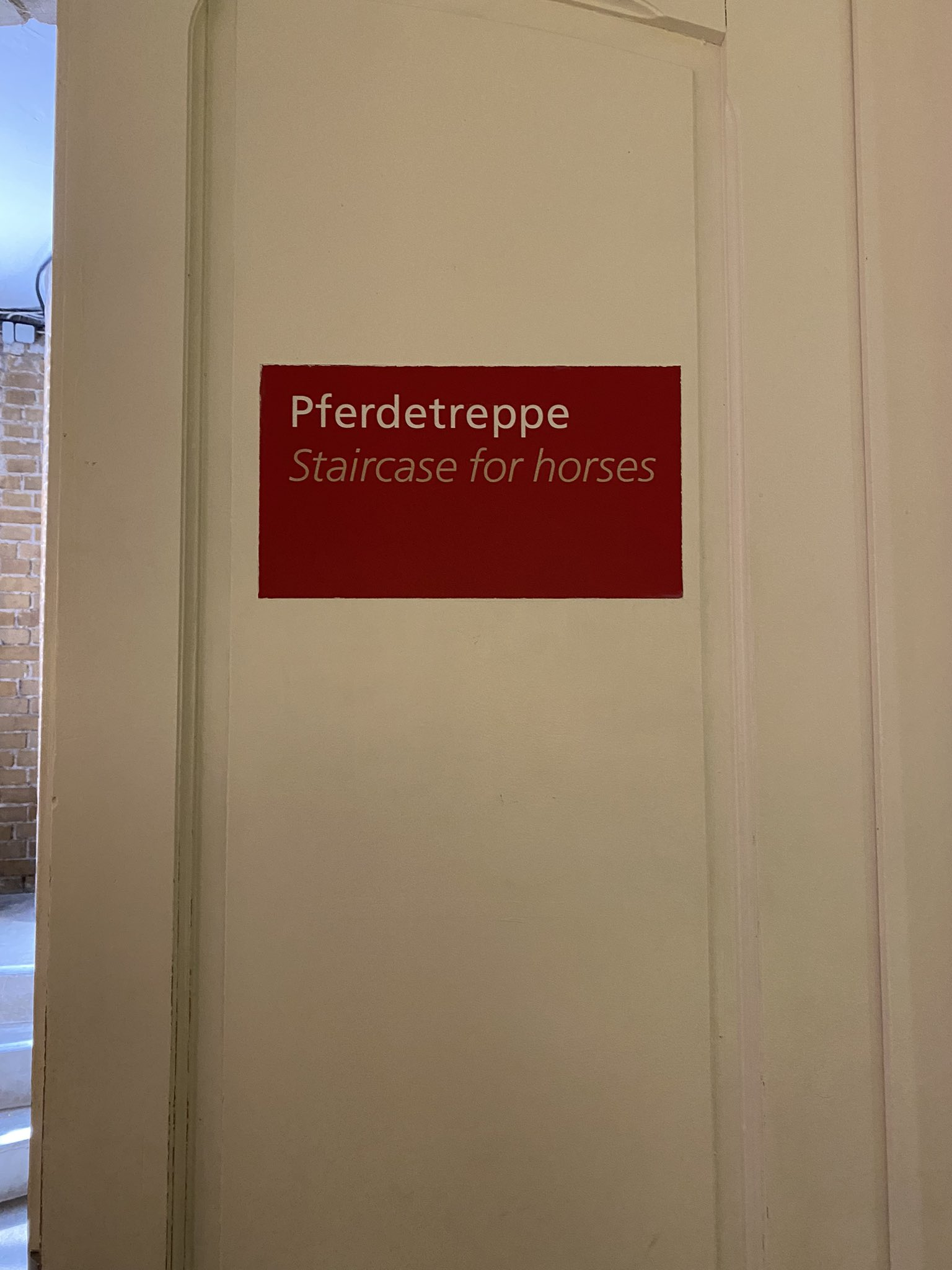
Pferdetreppe
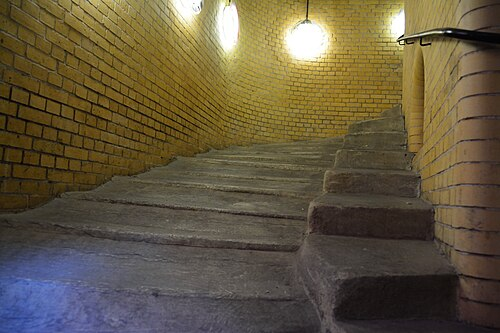
Some stairs in Berlin has a sing at their entrance saying “Staircase for horses”. At first I thought this as a literal translation of a non-typical staircase. But those were literally the staircase for horses. Here a picture from a hospital campus:
https://de.wikipedia.org/wiki/Pferdetreppe
A horse staircase is a staircase with specially shaped steps to allow its use by horses . Unlike a riding staircase , it was used in densely populated and industrialized cities of the 19th and early 20th centuries (when horse-drawn carriages were the main means of transport) to bring draft horses to the upper floors) of multi-story stables , thus enabling space-saving housing for the animals.
Prediction, language, and Markov chains
I revisited Noam Chomsky’s 2012 critique of statistical AI.
https://chomsky.info/20121101/
Chomsky’s 2012 reflection was prescient. While the statistical approach to AI achieved a level of commercial and practical success far beyond what many expected a decade ago, its core limitation persists: prediction is not comprehension. In both scientific inquiry and geopolitical implementation, treating statistical correlation as a substitute for deep structural understanding creates systems that are powerful, yet fragile and opaque.
That led naturally to Andrey Markov. In 1913, he analysed the first 20,000 letters of Pushkin’s Eugene Onegin, classifying them as vowels or consonants and measuring how one category followed another. It became the first empirical application of what we now call Markov chains. The Veritasium video is a good introduction.
In 1913, Andrey Markov conducted a study on the distribution of vowels and consonants in the first 20,000 letters of Alexander Pushkin’s Eugene Onegin, treating the text as a sequence of symbols and analyzing the statistical relationships between them. By classifying each letter as either a vowel or a consonant and analyzing the probabilities of transitions between these categories, Markov demonstrated that chains of dependent events could be rigorously modeled. This was the first empirical application of what are now called Markov chains.
The same idea appears in Google’s original PageRank: think of pages as states and links as transitions, then find the long-run probability of a random surfer landing on each page. A small interactive workbook made the connection concrete.
Noam Chomsky, a highly respected linguist, joined with two colleagues in a critique of LLMs. In addition to the issues previously discussed, they noted that LLMs’ method of learning language-scraping huge text databases from the internet-is completely different from the way children learn language. We acquire language by being immersed in the conversations and practices of human communities. This means there is ultimately no way LLMs can learn language in the way humans learn and live language-no way they can overcome the problems mentioned earlier. After iterating with ChatGPT on questions around morality and ethics, Chomsky concluded: ChatGPT exhibits something like the banality of evil: plagiarism and apathy and obviation. It summarizes the standard arguments in the literature by a kind of super-autocomplete, refuses to take a stand on anything, pleads not merely ignorance but lack of intelligence and ultimately offers a “just following orders” defense, shifting responsibility to its creators. Chomsky worried that with all the enthusiasm to incorporate LLMs into many computer applications, we will infuse this technology into many other technologies, a situation we might regret and be unable to turn off
Quotes from https://dl.acm.org/doi/pdf/10.1145/3747356
Also checkout the exercise from a book from Grand Valley State University
Janet Jackson had the power to crash laptop computers
Weird case but true
It turns out that the song contained one of the natural resonant frequencies for the model of 5400 rpm laptop hard drives that they and other manufacturers used.
Read here https://devblogs.microsoft.com/oldnewthing/20220816-00/?p=106994
Martial arts: Taido and Keysi
I started reading about Taido, a Japanese martial art founded by Seiken Shukumine in 1965. Compared with karate, its movement language feels more focused on mobility, off-axis attacks, spins, rolls, and changing levels. Instead of treating a stable stance as the default, it often turns the body into a moving target.
I also read about the Keysi Fighting Method, a close-range self-defence system built around survival in crowded, unpredictable situations. Its signature Pensador position uses the hands and elbows to protect the head and neck, while elbows, hammer fists, knees, and constant pivots become the main tools. Its visual influence is easy to spot in Christopher Nolan’s Batman films.
Also they have very cute drawings usually:
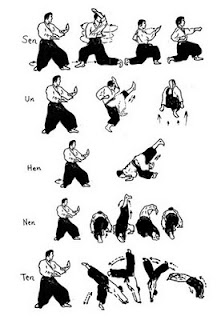
Taido (躰 道) is a Japanese martial art founded by Seiken Shukumine in 1965. The name “Taido” means “the way the body and soul” (internal and external). Taido had a relationship with Okinawa karate. First Seiken Shukumine Genseiryu karate founded in 1950, but in the 1960’s he found that the flow of martial arts, he was far away from karate, so he founded the new martial view the name of Taido
Quote from https://j2n-ma.blogspot.com/2012/08/taido.html
Key Technical Divergences:
- Movement Dynamics & Axis of Attack
- Karate: Focuses on generating maximum power from a stable connection to the ground. Energy flows through the legs, hips, and core into strikes via solid, rooted stances.
- Taido: Treats the human body like a gyroscope. Strikes are delivered mid-flight, mid-roll, or while bending the spine off-axis. A technique is rarely executed from a static upright position.
- Tactical Philosophy & Space Creation
- Karate: Employs precise distance management (Ma-ai) to intercept attacks, block-counter instantly, or absorb pressure while maintaining control of the line of engagement.
- Taido: Rejects static defense. Instead of blocking a blow, a Taido practitioner drops their torso to the mat or cartwheels sideways, using the attacker’s momentum against them while striking from a blind spot.
I also learned about Keysi Fighting Method (KFM). It is a self-defense system developed in Spain during the 1950s and 1990s by Justo Diéguez and Andy Norman. Built around street survival rather than sport, it assumes you are fighting multiple attackers at close range, often in tight spaces with no rules.
Unlike martial arts that rely on maintaining distance or standing long guards, KFM brings the fight into extremely close quarters (ultra-close range).
Things from before, and elsewhere
- The Spotlight Music Show, an Austrian youth music programme broadcast by ORF between 1968 and 1978, is full of excellent pop, rock, and folk performances. The recordings are freely available on YouTube.
- Bulgaria’s Pravetz computers were a Cold War technology story in miniature. Starting with Apple II-compatible machines and later IBM PC-compatible systems, they combined reverse engineering, state ambition, and industrial scale. For many Bulgarians, Pravetz was their first encounter with BASIC and personal computing, and remains both a source of nostalgia and a symbol of the era’s contradictions. It could be success but it couldn’t fight against popular chips after USSR fall.
- I knew roughly about Operation Condor, but did not realise how clearly its cross-border repression was documented after Paraguay’s Archives of Terror were discovered in 1992. I returned to it after translating the lyrics of “Latinoamérica” by Calle 13, Inti-Illimani, and Camila Moreno. Read more how this plan is revealed by a brave activist named Martín Almada https://es.wikipedia.org/wiki/Archivos_del_Terror
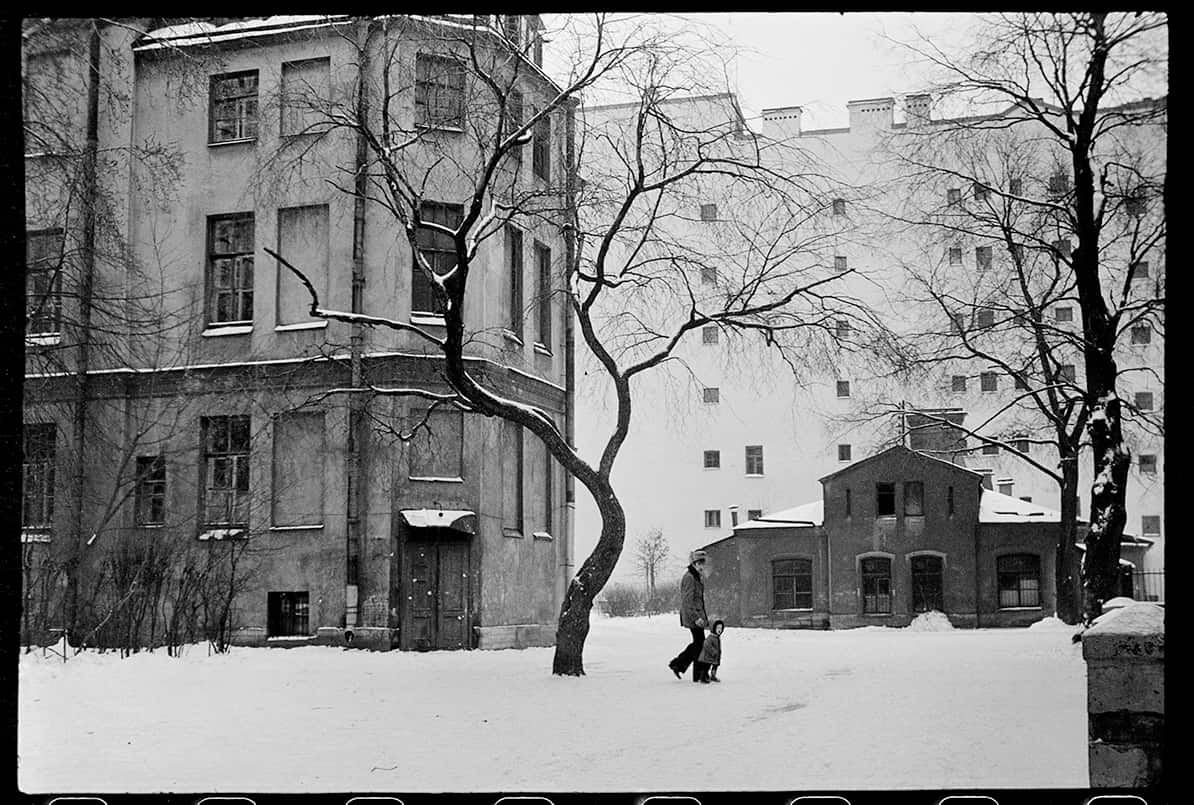
- Masha Ivashintsova was a Soviet photographer whose archive of more than 30,000 negatives was discovered by her daughter in 2017, seventeen years after her death. Her candid photographs of Leningrad, its underground artistic world, and ordinary urban life are extraordinary: mashaivashintsova.com.
Read this paper and like: “The AI layoff trap”
https://arxiv.org/pdf/2603.20617
If AI displaces human workers faster than the economy can reabsorb them, it risks eroding the very consumer demand firms depend on. We show that knowing this is not enough for firms to stop it. In a competitive task-based model of a transitioning economy, each firm captures the full cost saving from automation but bears only a fraction of the demand loss it creates in the product market; the rest falls on rivals. This demand externality traps rational firms in an automation arms race, displacing workers well beyond what is collectively optimal. The resulting loss harms both workers and firm owners. More competition and “better” AI amplify the excess; wage adjustments and free entry cannot eliminate it. Neither can capital income taxes, worker equity, universal basic income, upskilling, or Coasean bargaining. A Pigouvian automation tax can. The results suggest that policy should address not only the aftermath of AI labor displacement but also the competitive incentives that drive it.
Masha Ivashintsova (1942–2000) - a Soviet photographer recently revealed extensive photo archive
https://mashaivashintsova.com/
Masha Ivashintsova (1942–2000) was a Soviet photographer whose extensive archive of over 30,000 negatives remained completely undiscovered until 2017. Often referred to as the “Russian Vivian Maier,” she spent decades capturing everyday life, political atmosphere, and the artistic underground of Leningrad (St. Petersburg) without ever showing her work to the public.
• Underground Artistic Circle: Ivashintsova was heavily immersed in Leningrad’s non-conformist movement between the 1960s and 1980s. She had close relationships with prominent figures of the Soviet underground, including poet Viktor Krivulin, photographer Boris Smelov, and painter Boris Akselrod.
• Involuntary Commitment: Because she did not maintain official state-sanctioned employment and lived outside Soviet societal expectations, she was subjected to punitive psychiatry and involuntarily committed to a Soviet mental hospital for ten years (1981–1991).
• Discovery of Her Archive: In late 2017, 17 years after her death from cancer, her daughter Asya Ivashintsova-Melkumyan discovered box after box of undeveloped rolls and film negatives in an attic.
• Photographic Style: Her work features candid street photography, raw urban landscapes of Leningrad, intimate portraits of underground figures, and melancholy self-portraits. She shot predominantly on Leica and Rolleiflex cameras.
July '26 - Everything I Learned
Previously:
AWS Cert Manager updates
AWS Cert Manager (ACM) supports ACME protocol now. I will be fine with Lets Encrypt but good to know.
https://aws.amazon.com/blogs/aws/automate-public-tls-certificate-issuance-with-acme-support-in-aws-certificate-manager/
Until now, ACM public certificates were designed to be used almost exclusively with integrated AWS resources (like ALBs, CloudFront, or API Gateway) because AWS managed the private key. If you needed public certificates for customer-managed or non-integrated infrastructure, you had to either mess with complex custom lambda/export scripts or look outside AWS entirely. Let’s Encrypt was almost the most preferred approach.
The new AWS cert manager ACME support includes:
- Standard tools: Use Certbot, cert-manager, or acme.sh; private keys stay locally.
- Centralized controls: Administrators pre-approve domains and restrict certificate scope and key types, without giving application teams DNS credentials.
- Unified visibility: Certificates appear in ACM, with monitoring and audit trails through CloudWatch and CloudTrail.
- Automatic renewal: Reduces operational work as certificate lifetimes become shorter.
Basically what ACME provides.
Money sellers
My two-year-old nephew called the people at the bank “money sellers.” Technically, he was right. Too obviously right?
At his age, a place where you get bread is a bread shop. A place where you get money must follow the same logic. We laughed, of course. Then I thought about all the correctness of this statement and found it slightly less funny. This is exactly how modern modey works. Private banks sells money to create new money.
Private banks create money when they issue loans. But that fact isn’t the same thing as Modern Monetary Theory (MMT). It is an established feature of banking, explained by the Bank of England.
Suppose a bank lends you €10,000:
| What it records | Amount |
|---|---|
| New money in your account, available to spend | €10,000 |
| Your debt to the bank | €10,000 |
The bank creates the deposit alongside your promise to repay. It doesn’t need to transfer €10,000 from another customer’s savings account first. Money has been created, but you haven’t gained €10,000 in net wealth-you also owe €10,000. Repaying the principal reverses that creation. Banks remain constrained by capital, liquidity, regulation and lending risks. Bank of England
MMT makes a broader argument about governments that issue their own currency: their spending capacity is fundamentally constrained by real resources and inflation, rather than by needing to collect money first like a household. It incorporates bank money creation, but its policy conclusions go much further and are disputed.
Neo-Nazi Symbolism
https://de.wikipedia.org/wiki/Fourteen_Words
Just learned a new numeric symbolism around neo nazis. “Fourteen Words” is a white supremacist slogan first used by American neo-Nazi David Lane. It frames racist ideology as protecting white people and their children. Neo-Nazis use the number 14 as shorthand, often combined into 14/88, where 88 can stand for “Heil Hitler.”
June '26 - Everything I Learned
Every month I share the things I leraned and remembered to write down somewhere. Here are the June notes.
Berlin is serious about bats
I discovered a naturbelassener Park around Tempelhof nearby my apartment. Berlin quietly protects a lot of semi-wild spaces like bats.
NABU Berlin says that Berlin is the “capital of bats”: 18 bat species have been recorded in the city, and up to 11,000 bats overwinter in the Spandau Citadel alone. (NABU - Naturschutzbund Deutschland e.V.)
Nazi drug experiments
While I show a Nazi era concentration camp to my family during their visit to Berlin, I learned lots about the drug experiments in these camps.
Nazi doctors conducted radical medical experiments on concentration camp prisoners without consent. I knew it already but I didn’t know there were inhumane cocaine experiments and some psychedelics as well. The US Holocaust Memorial Museum groups these experiments into survival, drug-treatment, and ideological/racial categories. (Holocaust Encyclopedia)
More specifically, SS doctor Kurt Plötner is associated with mescaline experiments at Dachau, apparently connected to interrogation and “truth serum” research. These expreiments later mentioned on LSD researches. (Cambridge University Press & Assessment)
Eichenprozessionsspinner
I learned the story behind the German word that looks like a keyboard accident: Eichenprozessionsspinner, the oak processionary moth. the city was invaded, probabyl still is. Especially in the outer parts.
The adult moth is not the main issue. The caterpillars are. Their tiny hairs contain an irritating toxin and can cause skin, eye, throat, and allergic reactions.
Berlin is a good habitat for them because the city has many oaks in parks and along streets. (Berlin.de)
Plants that keep appearing
My father once pointed out a wild herb named (in Turkish) sinir otu to me on a Berlin sidewalk. He mentioned that it’s a medically important herb. I did not care much at the time. Now I keep seeing it everywhere.
The German name is Spitzwegerich, in English ribwort plantain, and its Latin name is Plantago lanceolata. The European Medicines Agency lists it as a traditional herbal medicine used for throat irritation, dry cough, cough with cold, and minor skin inflammation. (European Medicines Agency (EMA))
Also learned that blackberry tea is great for eye pressure apperently. I am not turning this into medical advice. It is just good tea actually.
Barry’s Berlin
Barry’s gymb Berlin gave me a small anthropology moment :/
Luxury gym, waiting list, strange people waiting outside, weird Google Maps energy, and a visible upper class snob culture fitness.
NUMA finally clicked
I learned more about NUMA, short for Non-Uniform Memory Access.
Small server:
CPU <-> RAM

Large multi-socket server:
CPU0 <-> RAM0
CPU1 <-> RAM1
CPU2 <-> RAM2
CPU3 <-> RAM3
Each CPU socket has memory that is physically closer to it. Local memory access is faster. Remote memory access still works, but it crosses the interconnect and costs more latency. Red Hat describes NUMA as a design where memory resources are allocated close to a CPU to improve access time. (Red Hat Documentation)
Linux exposes this topology nicely:
numactl --hardware
lscpu | grep NUMA
numastat
numactl --show
The practical lesson: big servers are not just “more CPU and more RAM”. Placement matters. Threads and memory should ideally live close to each other. Otherwise, a powerful machine can quietly waste performance by moving data across sockets.
Linux also has NUMA memory policy support, which controls from which NUMA node memory gets allocated. (Kernel Documentation)
Also read Jaana’s post on Numa.
Strudel and TidalCycles
I tried to configure Strudel and TidalCycles locally, then discovered that Strudel already works in the browser.
Strudel is basically a browser-based live coding environment that ports the TidalCycles pattern language to JavaScript. (Strudel)
Music rabbit holes
A great house track from Saudi Arabia:
Shoft Alhala, Radio Edit, by Vinyl Mode and Moayad
I also learned about Assa’d Khoury’s Electronic Touches Belly Dance, a 1978 Lebanese instrumental album built around funky electronic keyboards and Arabic melodies. It was reissued in 2026 after nearly 50 years. (WEWANTSOUNDS)
The most interesting part for me was the modified Farfisa-style keyboard world: electronic organs adapted for Oriental scales and quarter-tones. Arabic music needs pitches that standard Western keyboards do not naturally provide. This similar trend of tuning off the keyboards can also be observed other sub-cultures in North and central Africa.
AWS “What is” pages
I appreciated AWS’s “What is” pages.
The computer chip explanation is simple, direct, and mostly free of forced metaphors. It explains chips, silicon, etching, analog circuits, digital circuits, ASICs, SoCs, and AWS custom chips like Graviton, Inferentia, and Trainium in a clean way. (Amazon Web Services, Inc.)
Good technical writing does not always need storytelling.
May '26 - Everything I Learned
Zirkus Mond
I went of the Zirkus Mond shows called “What is Zirkus”. It was fantastic.
One thing that surprised me was a handmade “robot” used during the performance. The presenter explained how circuses have always followed new technologies closely and turned them into art. In some ways, circuses have historically been early adopters of technology rather than followers.
Where Have All the Sparrows Gone?
Apparently Berlin’s sparrow population is declining rapidly and nobody is completely sure why.
One theory I found interesting is that while adult sparrows can eat seeds and crumbs, baby sparrows depend almost entirely on insects during their first weeks of life. With insect populations collapsing due to pesticides and increasingly manicured urban environments, many chicks simply don’t get enough food.
Urban colonies are also vulnerable to diseases such as Salmonella and avian malaria, especially when combined with pollution and noise.
The Gold Under an Indian Temple
I learned about the enormous treasure discovered in the vaults of an Indian temple.
The amounts involved are so large that estimates reach tens of billions of dollars in gold, jewels, coins, and artifacts accumulated over centuries of donations. The discovery triggered legal battles, security concerns, and debates about ownership and preservation.
One of those stories that sounds fictional until you realize it actually happened.
The Smithsonian on Unsplash
The Smithsonian has published around 1,000 images on Unsplash.
What surprised me is the scale of the institution itself. The Smithsonian isn’t just a museum-it’s 21 museums, libraries, research centers, and even a zoo.
Hundreds of years of art, science, culture, and history are now much easier to access and reuse.
Bromantane
I discovered Bromantane, a Russian drug originally developed for improving physical and mental performance.
It acts as both a stimulant and an anxiolytic, which is a strange combination. Unlike classical stimulants such as amphetamine, its exact mechanism is still not fully understood.
It’s sometimes described as an “adaptogen” or “actoprotector”, terms I had never encountered before.
Yogi Kazım
I came across the story of Yogi Kazım.
One of those unusual figures who seem to exist somewhere between performance art, spirituality, self-invention, and local legend. Definitely a rabbit hole worth exploring.
https://tam-museum.org/yogi-kazim
Yogi Kazim lived long and his own developed methods which are influced from Yoga and many other studies.
April '26 - Everything I Learned
Georg-von-Rauch-Haus
A building next to my office has much more interesting history than anybody passing by expected.
The Georg-von-Rauch-Haus was occupied by activists in 1971 during West Berlin’s housing protests and became one of the symbols of Berlin’s squatter movement. It is named after Georg von Rauch, an activist who was killed by police shortly before the occupation.
There this amazing symbol song about the house https://www.youtube.com/watch?v=TYSFGT7UGS8
The Art Manifesto at Bethanien
I visited an exhibition at Bethanien and ended up spending more time thinking about an art manifesto than the artwork itself.
Bethanien itself has an interesting history. It started as a hospital in the 19th century and later became one of Berlin’s most important cultural and artistic spaces.
Gecekondu at Kottbusser Tor Berlin
There is a small hut near Kottbusser Tor called “Gecekondu”.
“Gecekondu” is a Turkish word meaning “built overnight”. This one was built as a protest against rising rents and the privatization of social housing in Berlin.
Behind it is Kotti & Co, a movement formed by local residents, many from Turkish guest-worker families. What looks like a simple wooden hut is actually a political meeting point, community center, and symbol of resistance against displacement.
There are many dramas foing on inside this initiative but the hut standing there is a real statement.
Schwerbelastungskörper
I didn’t know that there was a giant concrete cylinder in Tempelhof without an active purpose right now.
The Schwerbelastungskörper (“heavy load-bearing body”) was built by Albert Speer between 1941 and 1942 to test whether Berlin’s ground could support a gigantic triumphal arch planned by the Nazis.
The arch was supposed to be around three times larger than the Arc de Triomphe in Paris.
The arch was never built, but the test structure remains. It is one of the strangest reminders of how ambitious and absurd some of the plans for Nazi Berlin were.
Timmy the Whale
I went down a rabbit hole reading about Timmy, a whale that became a national story in Germany.
What interested me most was the public reaction. Scientists argued that intervention would likely cause more suffering and that the whale should be left alone, but many people demanded that something be done.
Germans went a bit too emotional almost hysterical on this topic.
March '26 - Everything I Learned
I usually take notes and try to follow the slipbox technique for storing the new information that I find out interesting during a month. This month I didn’t take notes as an experiment to see how much I will remember. Turns out slipbox note taking is important.
The Nepal Royal Massacre: The Impossible King
The 2001 massacre of the Nepalese royal family remains one of the strangest royal tragedies in modern history. In June 2001, Crown Prince Dipendra of Nepal allegedly killed nine members of his own family, including the king and queen, reportedly over a dispute about his marriage, before shooting himself. The massacre did not just devastate the royal family. It also threw the monarchy into chaos, led to the surreal 54-hour reign of a king in a coma, and gave rise to conspiracy theories that would shadow the throne until its eventual abolition.
What makes the story especially interesting is how absurd the events after became. After shooting his family and himself, Dipendra fell into a coma. Even so, he was officially declared king and remained on the throne for three days before dying, creating the bizarre spectacle of a monarch who reigned without ever regaining consciousness.
Public suspicion quickly turned toward Gyanendra, the dead king’s brother. He was conceniently absent from the dinner, while his immediate family escaped with only minor injuries. His first public explanation, that the massacre resulted from an “accidental discharge of an automatic weapon,” was so implausible that it only deepened distrust and further damaged the monarchy’s legitimacy.
Cicero’s De Oratore
People say Cicero must be read in Latin but that will be impossible for me. I have a plan to read in English or Turkish in the future. I believe it will inspire many who wants to be better in public speaking. Writing in the crumbling Roman Republic, Cicero’s work on the “Ideal Orator” argues that technical skill is secondary to character. Search for Marcus Tullius Cicero, De Oratore (Book I-III). For Cicero, rhetoric without wisdom is a weapon: persuasive power without ethics becomes a threat to the state. Cicero dismissed the idea that rhetoric could be mastered as a mere technique. A real orator, in his view, had to be a polymath, versed in law, culture, and human psychology. Without that breadth, one was not an orator, only a shouter.
February '26 - Everything I Learned
Leslie Lamport once said:
“If you know something but you don’t write it down, you only think you know it.”
Rethinking Erlang Distribution
While exploring alternatives to libcluster, I came across Partisan.
Partisan is a distribution layer for BEAM applications that bypasses standard Distributed Erlang and manages connections manually over TCP. Instead of relying on Erlang’s built-in node discovery and full-mesh networking, it allows developers to choose different network topologies such as peer-to-peer, client-server, or publish-subscribe depending on the use case. Although Erlang’s distribution protocol has been extremely stable for years and even the official documentation notes that the node communication protocol has remained largely unchanged for a long time, Partisan replaces this mature BEAM distribution layer. Stability is great but experimental new tools can create more flexibility and opportunities. Partisan is one of those experiments.
Read more:
The Mystery of zeb_def_ipc Files on macOS and ZebOs in Corporte Services
At some point I saw strange files in /tmp called zeb_def_ipc_*.It seemed suspicion. Turns out they usually come from corporate security software like Zscaler or FortiClient. The name comes from ZebOS, a commercial routing engine derived from the open-source GNU Zebra project.
Zebra was created in 1996 and allowed Unix systems to operate as full routing platforms supporting protocols like BGP and OSPF.
Later the creators built ZebOS, a commercial version widely used inside networking and security products.
The ipc part of the filename stands for Inter-Process Communication. These files are actually Unix domain sockets used internally so different parts of the VPN client can communicate with each other.
If you want to see which program is using them:
sudo lsof /tmp/zeb_def_ipc*
If you delete them while your VPN is active, your connection will likely break. Rebooting usually cleans them up.
Schmerzensgeld: A German Legal Curiosity
Another concept I learned about recently is Schmerzensgeld. It literally translates to “pain money.”
In Germany, it refers to financial compensation for non-material damages, such as pain and suffering after an injury. The legal basis comes from §253 of the German Civil Code. One example: slipping on an icy sidewalk where maintenance was neglected may lead to compensation claims if responsibility can be proven.
Calendar Traditions I Relearn Every Year
Every year I forget the exact order of the German carnival days.
And every year I learn them again.
- Rosenmontag: Carnival Monday. Huge in Cologne, Düsseldorf, and Mainz. There is a special civil comission that prepares the huge carnival there. During carnival there are huge street parades, exessive drinking, and candy throwing. Historically carnival allowed people to mock authorities and social hierarchy, which is why political satire is still common in the parade.
- Faschingsdienstag: Carnival Tuesday. The carnival party continues to this day. After midnight the celebrations stops.
- Aschermittwoch: Ash Wednesday. This day is mostly about religion. The theme shifts from party to reflection.
Different terms are used for carnival around the region:
- Karneval: Rhineland (Cologne, Düsseldorf)
- Fasching: Bavaria, Austria
- Fastnacht / Fasnet: Southwest Germany, Switzerland
Berlinale Moments
I went to Berlinale this year and watched two films that won the Golden Bear AND the Silver Bear Grand Jury Prizes.
Both films were directed by Turkish filmmakers, which made the whole experience even more interesting.
The Golden Bear went to Yellow Letters by İlker Çatak.
Çatak was born in Berlin to Turkish parents and is generally considered a German (Berliner) filmmaker. German newspapers highlighted this after the win with headlines along the lines of “Gold stayed in Berlin.”
The film follows a theatre couple who lose their jobs after political pressure and struggle to rebuild their lives. It was very relatable to me.
The Silver Bear Grand Jury Prize went to Salvation (Kurtuluş) by Emin Alper.
This one takes place in a remote mountain village and revolves around a land dispute that gradually escalates. The atmosphere is dense and uncomfortable in a deliberate way. I loved “Salvations” artistic part more.
Both movies were political movies and they try to point out some of the heavy topics in Turkish politics. But it will be reltable to international audiance as well.
Göbekli Tepe in Berlin
I also visited the Göbekli Tepe - Building community - exhibition at the James-Simon-Galerie in Berlin.
With the special exhibition “Building community. Göbeklitepe, Taş Tepeler, and life 12,000 years ago” the Vorderasiatisches Museum is focusing on art and sculptures from the first settled cultures in the south-east of present-day Türkiye. There, people erected monumental stone structures and populated them with spectacular stone sculptures. Curated in collaboration with Turkish archaeologists, the exhibition presents the sculptures, many of which are being shown abroad for the first time, together with architectural reconstructions, media, and photos by Spanish photo artist Isabel Muñoz.
The most memorable part was the photographic gallery inside the exhibition. Instead of presenting the site as static archaeological information, the photographs pull you into the landscape and atmosphere of the excavation.
I learned again the importance of Göbekli Tepe on the human history again.
Shocking thing is this place was discovered entirely by coincidence and a farmer’s insistence. After the discovery the entire known history of humanity changed.
January '26 - Everything I Learned
Previously: EIL June, EIL July, EIL August, EIL September, EIL October, EIL November, EIL December
Turkish punk underground
Turkey has a long-running DIY punk scene shaped by political pressure, small venues, and tight community networks. It survives through zines, Bandcamp releases, and live shows rather than mainstream exposure. Source: Bandcamp
Orkestar Bakije Bakića
A Serbian Roma brass orchestra from Vranje known for high-energy čoček and improvisation-heavy performances. Their music is central to weddings, festivals, and the southern Serbian brass tradition. Sources: https://en.wikipedia.org/wiki/Guča_Trumpet_Festival, https://www.discogs.com/artist/920987-Ansambl-Bakije-Baki%C4%87a I have discovered them through this work: https://www.youtube.com/watch?v=OgWGJmJdix0
Guča Trumpet Festival
Guča is the global focal point of Serbian brass music and Roma trumpet culture. It shaped how Balkan brass became internationally recognized. Source: https://en.wikipedia.org/wiki/Guča_Trumpet_Festival
Cursor usage insights
I had a look at my Cursor usage. My consistent daily usage of cursor with extreme token consumption shows AI tooling becoming a primary thinking interface of my life. October and Thursdays were peak productivity periods, not nights or weekends.
MySQL and MariaDB split
A random fact from X. MySQL and MariaDB are named after Michael Widenius’s daughters. MariaDB exists because Widenius forked MySQL after Oracle’s acquisition to keep it open source. Source: https://mariadb.org/about/
Istio blackhole clusters
In Istio, blackhole clusters intentionally drop traffic when no valid route exists. They are a safety mechanism, not a bug.
GTUBE spam test string
GTUBE is a standardized test string that triggers spam filters with an effectively infinite score. Using it outside controlled environments can destroy sender reputation. Source: https://spamassassin.apache.org/gtube/
Anyone who sends the GTUBE test string through real email infrastructure will almost certainly be permanently banned by major email providers. There is no appeal path in practice; treat it as a one-way door.
Problem of Points
Pascal and Fermat solved fair reward splitting by evaluating future probabilities, not past scores. This directly led to probability theory and expected value. Source: https://www.youtube.com/watch?v=_YRfSe-f1FE
Euclid’s Algorithm
The oldest known algorithm computes the greatest common divisor using repeated division. It underpins modern number theory and unique factorization. Source: https://substack.com/redirect/72c08c81-4fb1-4cbc-af90-da52ae508f87
3Blue1Brown SoME4 prizes
SoME4 shifted prizes toward content useful for teachers rather than viral popularity. The focus was clarity, reusability, and classroom adaptability. Source: https://www.3blue1brown.com/some
Hardware instant design and plan via 3e8 Blueprint 3e8blueprint
3e8 Blueprint converts vague hardware ideas into structured designs with schematics and bills of materials. It bridges ideation and engineering execution. Source: https://www.3e8blueprint.com/
E-Werk Berlin, Moka Efti, Berlin and industry
Originally an electric substation, E-Werk became a foundational techno club in the 1990s. Its reuse reflects Berlin’s habit of turning industrial ruins into cultural landmarks. I have learned many more during a free tour on the day Deutsche Kinamatek opening at E-Werk. They have moved from another building.
Source: https://industriekultur.berlin/ort/e-werk-berlin/
Berlin’s industrial identity is best understood through architecture and cinema. Watching Metropolis with live orchestra makes that legacy impossible to ignore. Source: https://babylonberlin.eu
During my cold winter night touring I have learned some more about Berlin 1920s and Leipziger Str (near Checkpont Charlie) and the cafe Moka Efti. The street was very glorious back in the days. Nowadays only white collar business places there. Moka Efti was a massive Weimar-era café and entertainment complex serving tens of thousands daily. Its modern fame comes from Babylon Berlin, though the show fictionalizes its darker aspects.
Source: https://www.berlin.de/en/attractions-and-sights/3560266-3104052-moka-efti.en.html
Other industrial buildings and their stories in Berlin: https://industriekultur.berlin/
November - Everything I Learned
Previously: EIL June, EIL July, EIL August, EIL September, EIL October
In-Place Pod Resizing in Kubernetes
Kubernetes now supports true in-place pod resource resizing, allowing CPU and memory requests or limits to be increased or decreased without triggering a pod restart. This removes the need for disruptive rolling updates when tuning workloads. It improves cluster reliability, especially for autoscaled or performance-sensitive workloads where right-sizing can be done reactively instead of preemptively. Read more palark.com/blog/in-place-pod-resizing-kubernetes
OpenTelemetry Transformation Language (OTTL)
OTTL is a declarative transformation language integrated into the OpenTelemetry Collector pipeline. It enables deterministic manipulation of traces, metrics and logs through rule-based statements that resemble fluent-bit filter semantics but with stronger typing and composability. OTTL.run provides an interactive environment to write, test and validate transformations before deploying them in production. This simplifies complex telemetry normalization tasks such as attribute remapping, sampling logic and record enrichment. Reference: https://ottl.run
December - Everything I Learned
Previously: EIL June, EIL July, EIL August, EIL September, EIL October, EIL November
SCEP - Simple Certificate Enrollment Protocol
Technically, SCEP (RFC 8894) is an HTTP-based protocol that automates the distribution of X.509 certificates by wrapping a PKCS#10 request inside a PKCS#7 encrypted envelope. It authenticates these requests using a pre-shared challenge password, allowing “headless” devices like routers and mobile phones to securely enroll with a Certificate Authority without manual intervention.
- SCEP is like a hotel room you enter with a generic password (Shared Secret). If someone steals that password, they can get in.
- Modern TLS (EST/ACME) is like a high-end office you enter with a biometric scan or a unique, encrypted digital key. It ensures the device is exactly who it claims to be before it ever sees the “key.”
**The Passion of the Cut Sleeve - Han Dynasty, China (~7–1 BCE)
** A story between Emperor Ai of Han & his favorite official, Dong Xian. While the two were napping together, the Emperor woke to find Dong Xian fast asleep on his long silk sleeve. Emperor didn’t want to disturb Dod Xian, so he took a knife and cut off his own sleeve to leave quietly. The phrase “Passion of the Cut Sleeve” (duanxiu) became the standard literary euphemism for male homosexuality in China for two millennia.
Chandra OCR by Datalab - OCR model that handles complex tables, forms, handwriting with full layout
Datalab’s Chandra is great at benchmarks:
- Supports 40+ languages
- Extracts complex texts, tables, formulas easily
100% open-source.
https://github.com/datalab-to/chandra
A very short story of Switzerland
Switzerland stayed out of major foreign wars mainly because it chose “permanent neutrality”. European powers formally recognised Switzerland’s neutral status at the Congress of Vienna in 1815, and the Swiss committed to not joining military alliances, not sending troops to fight and not letting warring armies use its territory. This became central to its foreign policy and helped it avoid participation in the World Wars and other conflicts. Switzerland did not fight in World War I or World War II. Its neutrality was backed by armed defence and diplomacy. Also the Alps and prepared defence forces made invasion unattractive to neighbours. 
Switzerland’s wealth comes from a mix of economic strengths: a very high GDP per capita; a globally important banking and finance sector supported by decades of stable, “neutral policy”; advanced pharmaceuticals and chemicals exports; and precision manufacturing like watches.
Neutrality kept Switzerland out of destructive wars, and long-term stability, global trade, and strong financial and tech sectors made it rich.
October - Everything I Learned
Previously: EIL June, EIL July, EIL August, EIL September
SAIF framework: Google’s Secure AI Framework
A conceptual framework to secure AI systems by Google. safety.google/cybersecurity-advancements/saif/
Lattice-based cryptography and Post Quantum Cryptography (PQC)
Lattice-based cryptography secures data using math problems built on grids (lattices) that are easy to create but extremely hard to solve. It’s considered a top candidate for post-quantum cryptography because even powerful quantum computers (the so-called Q Day machines that could break today’s encryption) can’t efficiently solve these lattice problems. In short: it’s a future-proof way to keep encryption safe in the quantum era.
A book about the punk scene in Turkey 1978-1999
A nice website dedicated to “An Interrupted History of Punk and Underground Resources in Turkey 1978-1999” book turkiyedepunkveyeraltikaynaklarininkesintilitarihi.com
A nice album discovery “Folk tunes of pakistan on the latin american beat 1965”
The 1965 EP titled Folk Tunes of Pakistan on the Latin American Beat by Pakistani composer Sohail Rana takes folk melodies from regions like Sindh and the Punjab and re-imagines them in Latin and surf-inspired styles-tracks like “The Khyber Twist” mix electric guitar, organ and regional rhythm patterns. Rana is primarily known for his film-music work in Pakistan.
September - Everything I Learned
Previously: EIL June, EIL July, EIL August
Databases: RocksDB, FoundationDB & LMDB
Three very different types of databases caught my eye this month: RocksDB, FoundationDB, and LMDB.
RocksDB is an embedded, SSD-optimized key-value store from Facebook, great for local high-throughput workloads.
FoundationDB, Apple’s open-source project, flips that around. It’s a distributed, ACID-compliant database that scales horizontally while keeping strong consistency.
LMDB: It’s minimalist database. Also suitable for embedded projects. It’s a memory-mapped B+ tree with zero-copy reads and strong ACID guarantees. Small, fast, but limited to one writer at a time. Each one nails a different corner of the performance–consistency–simplicity triangle.
There are other interesting compact databases here in this tool to benchmark them: github.com/LMDB/dbbench
Random stufff
- StarRocks: an MPP SQL engine built for lightning-fast analytics.
- StateGraph.dev: Stategraph replaces the flat state file with a database-backed graph. Independent changes can run in parallel, and the state becomes queryable and auditable. Parallel teams. No lock waiting. Audit-ready state.
- Rebar4 Kickstarter: Erlang’s build system keeps evolving. Go support.
- Elixir Koans: a fun, interactive way to learn idiomatic Elixir.
Copying Files Faster on Linux
- For large local copies:
rsync -a --info=progress2 /source/ /destination/
- For tons of small files:
tar cf - /source | (cd /destination && tar xf -)
- Across disks:
rsync -a --info=progress2 --inplace --no-whole-file /source/ /destination/
256 Bytes of Art
Discovered A Mind Is Born by Linus Åkesson. A full audiovisual demo packed into just 256 bytes of code. Crazy part is it’s audio and visual.
August - Everything I Learned
Previously:
The Japanese word “Kara”
- 🎶 Karaoke (カラオケ) = “Empty orchestra” → singing over instrumentals.
- 🥋 Kara-uke (空受け) = “Empty block” → defense with calmness, no force.
- 🥋 Karate (空手) = “Empty hand” → martial art of unarmed combat.
Salman Rushdie reads from Edward Said’s After the Last Sky book
Salman Rushdie reads from Edward Said’s After the Last Sky, a book about how Palestinian identity is lived through repetition and shared codes. One striking example is a letter from a self-proclaimed Palestinian karate champion, using karate as proof of belonging. Said notes that such repetition-being a “Palestinian karate expert” becomes a way of insisting on existence. At the same time, he shows how this identity is invaded by outside definitions and how women’s voices are often left out.
https://www.youtube.com/watch?v=Sf0J9KlHank
Bus telolek - The horn DJs - Indonesian underrated djs
I learned about the bus telolet culture in Indonesia, where kids gather along highways shouting “Om Telolet Om!” (which means “Sir, honk the horn!”) to passing bus drivers. In response, the drivers play their custom multi-tone horns, called telolet, which create melodic and often playful rhythms instead of simple honks. This was a roadside game but niow became a viral internet sensation since 2016, even inspiring famous DJs to sample the sound in their tracks. Today, it’s still alive, especially with tourism buses, showing how something as ordinary as a bus horn can turn into a joyful cultural phenomenon.
NIST Finalizes ‘Lightweight Cryptography’ Standard to Protect Small Devices
Traditional algorithms like AES or SHA-256 are too resource-intensive for many small devices. The new standard offers efficient, compact, and secure cryptography. It’s designed to resist side-channel attacks. The standard is built around a group of cryptographic algorithms in the Ascon family. Ascon was developed in 2014 by a team of cryptographers from Graz University of Technology, Infineon Technologies, and Radboud University.
| Algorithm | Function | Key Benefit |
|---|---|---|
| ASCON-128 AEAD | Encrypt + Authenticate | Efficient, side-channel resistant AEAD |
| ASCON-Hash 256 | Fixed-size hash digest | Lightweight integrity checks |
| ASCON-XOF 128 | Variable-length hash output | Tailored performance vs. security |
| ASCON-CXOF 128 | Labeled XOF for domain separation | Collision-resistant across devices |
Banana peel for plants
You can chop up a banana peel, leave it in a jar of water overnight, and then use that water (not the peels) to waqter your plants. This can repeat about once a month. This works because banana peels contains nutrients like potassium, phosphorus, calcium, and magnesium into the water, which support strong roots, and better flowering. It’s a natural fertilizer, but it’s best not to overdo it since too much can cause mold or disturb the balance of the soil.
July - Everything I Learned
Previously:
Elixir is actually great
I keep learning that Elixir is actually great.
The BEAM (Bogdan/Björn’s Erlang Abstract Machine), the virtual machine that runs Erlang and Elixir, has native support for hot code upgrades, which is already a great feature.
This is a known fact. What I’ve recently learned is that BEAM can keep two versions of a module loaded at the same time.
Importance of the R.I.C.E. protocol
After twisting my ankle during karate training, I once again realized the importance of the R.I.C.E. protocol.
- Rest – no weight on the injured area for a minimum of 72 hours, ideally a week.
- Ice – ice pack covered with a cloth, 15–20 minutes every 2–3 hours during the first 24–48 hours.
- Compression – elastic medical band, not too tight. If the area turns blue, stop immediately.
- Elevation – elevate above heart level.
On top of this, supplements are important for a good recovery.
A sufficient amount of protein, 3g of creatine daily (or continue your usual dose if you’re already taking supplements), omega-3, vitamin C (double the daily recommended dose), magnesium (double the daily recommended dose), plenty of water, and collagen from any source.
This combo helps with proper recovery of the injured area.
After the 5th day, I started applying hot packs instead of ice packs. This helps circulate blood in the tiny vessels.
These are just parts of the recovery process. The first step should always be an ultrasound and/or x-ray to understand the extent of the injury.
Luxembourg has its own language – Luxembourgish
I didn’t know Luxembourgish is classified as a language. It’s indeed all about political borders. Some say “Limburgisch” is a German dialect, which is what I thought too. It sounds exactly like what you’d expect from its location-a mix of German and French.
I also learned that, unlike many European languages that have a direct word for “please” (like bitte in German), Luxembourgish doesn’t have a single standalone word for it. Instead, they use formal sentences and tones, with the phrase “wann ech gelift.” This literally means “If I may” or “if you please.” In a way, this is their version of “please.”
I find it similar to French. French has s’il vous plaît, which also literally means “if you please,” but is generally translated directly as “please.”
“wann ech gelift” can also be abbreviated as “w.e.g.” and, as far as I understand, even pronounced that way.
The City of London
The City of London, often called “the Square Mile,” holds a unique legal status as a self-governing entity distinct from the rest of Greater London. Its roots trace back to Anglo-Saxon times, with its own ancient government, the City of London Corporation, headed by the Lord Mayor of London. Unlike other boroughs, it maintains its own police force, the City of London Police, and possesses special historical privileges and financial autonomy, stemming from its long-standing role as a global financial center.
The City of London’s unique status greatly benefits the banking industry by creating a specialized, concentrated financial hub. Banks have a direct voice in local governance, and the unparalleled concentration of financial firms, legal services, and talent fosters collaboration and efficiency. A robust legal system provides stability and a secure environment for complex transactions, while the City itself actively promotes London as a global financial leader.
June - Everything I Learned
A new series I hope to keep monthly. Just a simple note of everything I learned whether trivial or significant.
Gleam vs Elixir
Wiki says:
Gleam is a general-purpose, concurrent, functional high-level programming language that compiles to Erlang or JavaScript source code.
Gleam is a statically-typed language, which is different from the most popular languages that run on Erlang’s virtual machine BEAM, Erlang and Elixir. Gleam has its own type-safe implementation of OTP, Erlang’s actor framework. Packages are provided using the Hex package manager, and an index for finding packages written for Gleam is available.
So what I understand is Elixir users can easily use Gleam but why. That’s why I have learned:
Gleam and Elixir are both languages that run on the Erlang VM (BEAM), but they primarily different in their type systems and designs. Gleam is statically typed, meaning types are checked at compile time, which helps catch errors early and ensures predictability. It favors simplicity and performance, with a syntax inspired by ML-style languages. For example, a Gleam function looks like:
fn add(x: Int, y: Int) -> Int {
  x + y
}
Elixir, on the other hand, is **dynamically typed ** and focuses on developer productivity, expressiveness, and fault tolerance. It allows for powerful metaprogramming and a flexible development style. While it supports optional type specs, type checking happens at runtime unless explicitly enforced. An equivalent function in Elixir would be:
def add(x, y), do: x + y
Natural Greenfly Remedy: Milk Spray
A surprisingly effective natural solution: mix 1 part milk with 8 parts water and spray it generously on greenfly-infested plants.
Make sure to cover both sides of the leaves, especially the underside.
My father recommended this, advising to apply it only when there’s no direct sunlight. I was skeptical, but it worked amazingly well.
I had to repeat the treatment a few times to eliminate newly hatched greenflies from previously laid eggs.
Lavender Oil vs. Mosquitos
Lavender oil seems to repel mosquitos-at least the European kind-and smells pleasant during hot summer days. It also gives a refreshing feeling. I’m unsure about its safety on facial skin, so apply cautiously.
116116 – Emergency Blocking Hotline in Germany
In Germany, 116116 is the central number to block all your bank cards, SIM cards, and digital ID in case of theft or loss. Works fast.
Free SIM Card Replacement
Lost or stolen SIM in Germany? If you don’t have the PIN/PUK and the card doesn’t function, most providers will replace it for free. If it’s functional, they may charge a small fee.
Key Cylinder Replacement Takes Time
If a master key for an apartment building (e.g., 8 flats) gets stolen, replacing all key cylinders takes at least 6 week; even if it’s urgent.
I have also learned that changing a basic cylinder lock yourself isn’t that difficult. It only takes 5 minutes if you have screwdriver and the replacement cylinder.