notes
10 posts in notes.
The Cost of City Transformation
I was born and raised in Imrahor, a valley neighborhood in Ankara that lived inside strange conflicted feelings. This entire neighborhood was abandoned, self built small houses, green, autonomous, forgotten yet so close to the historically bureaucratic and aristocratic center of the capital. A patch of wild area where wild birds stop by when I was a child. The neglect within walking distance of power.
For decades it existed in that liminal state: half-inhabited, half-erased from official memory. Also for decades this area was considered to be the lungs of the city and had great potential. Then one day it was demolished to be replaced by tall buildings. Not gradually gentrified, but cleared entirely. The valley opened for whatever the city’s next transformation demands.
Back in 2023 when the razoring of the neighborhood happening, I went back with a camera to freeze what remained: an entire neighborhood giving away its last breath, surrendering the last traces of memory still held in crumbling weak walls and scattered rubble. These photographs are not documentation of progress. They are a record of what urban transformation costs when the people who carry a place’s memory are not the ones who decide its fate. A record of the power of the state razoring what people build with their own hands.
I have the new photos as well. But that is too ugly to show. Simply tall buildings, typical Turkish urbanization.
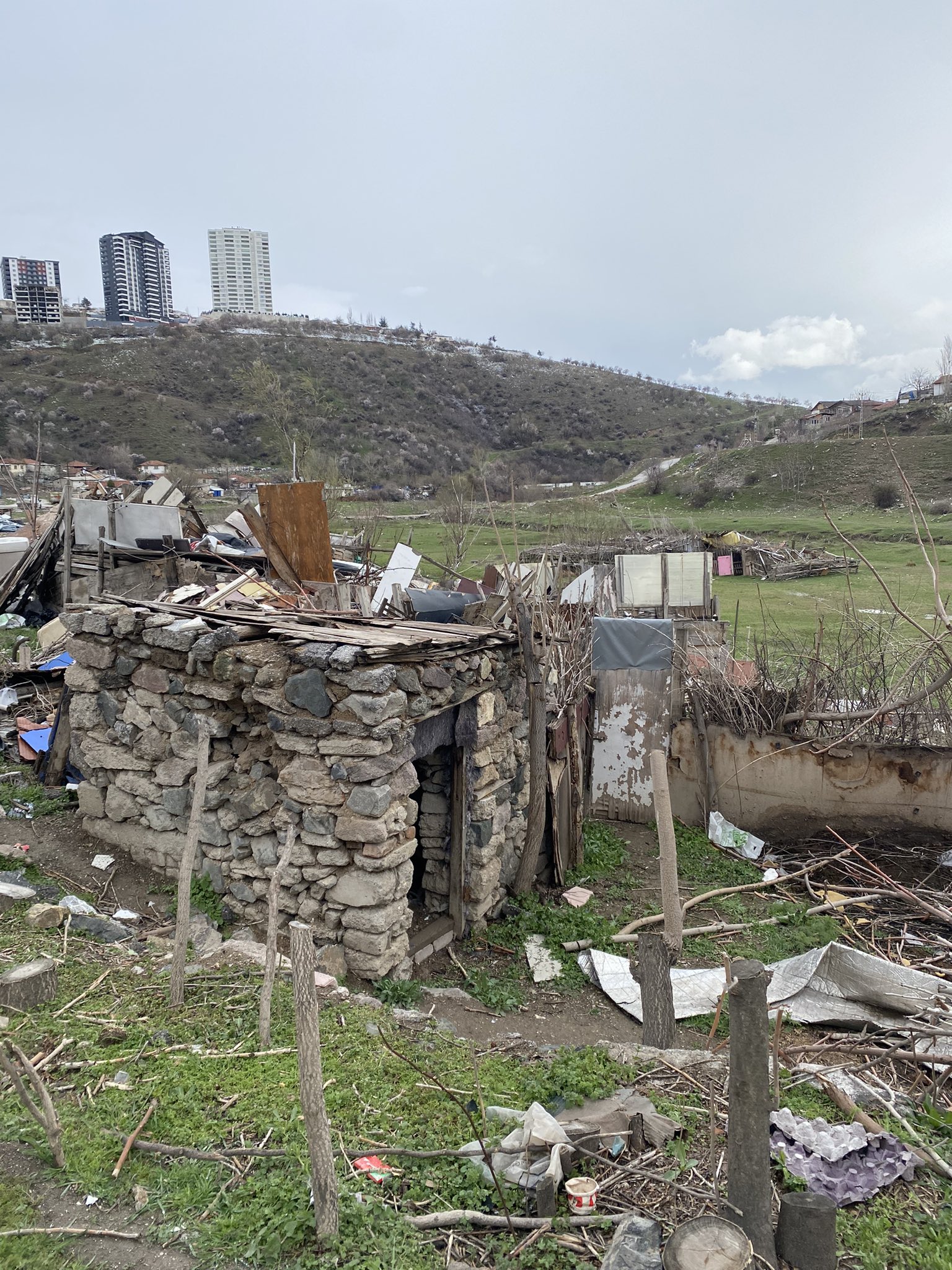
The new city already waits on the edge of the hill, creeping in to greens. Below it, the valley floor is stripped back to earth, stone, and whatever could not be carried away.
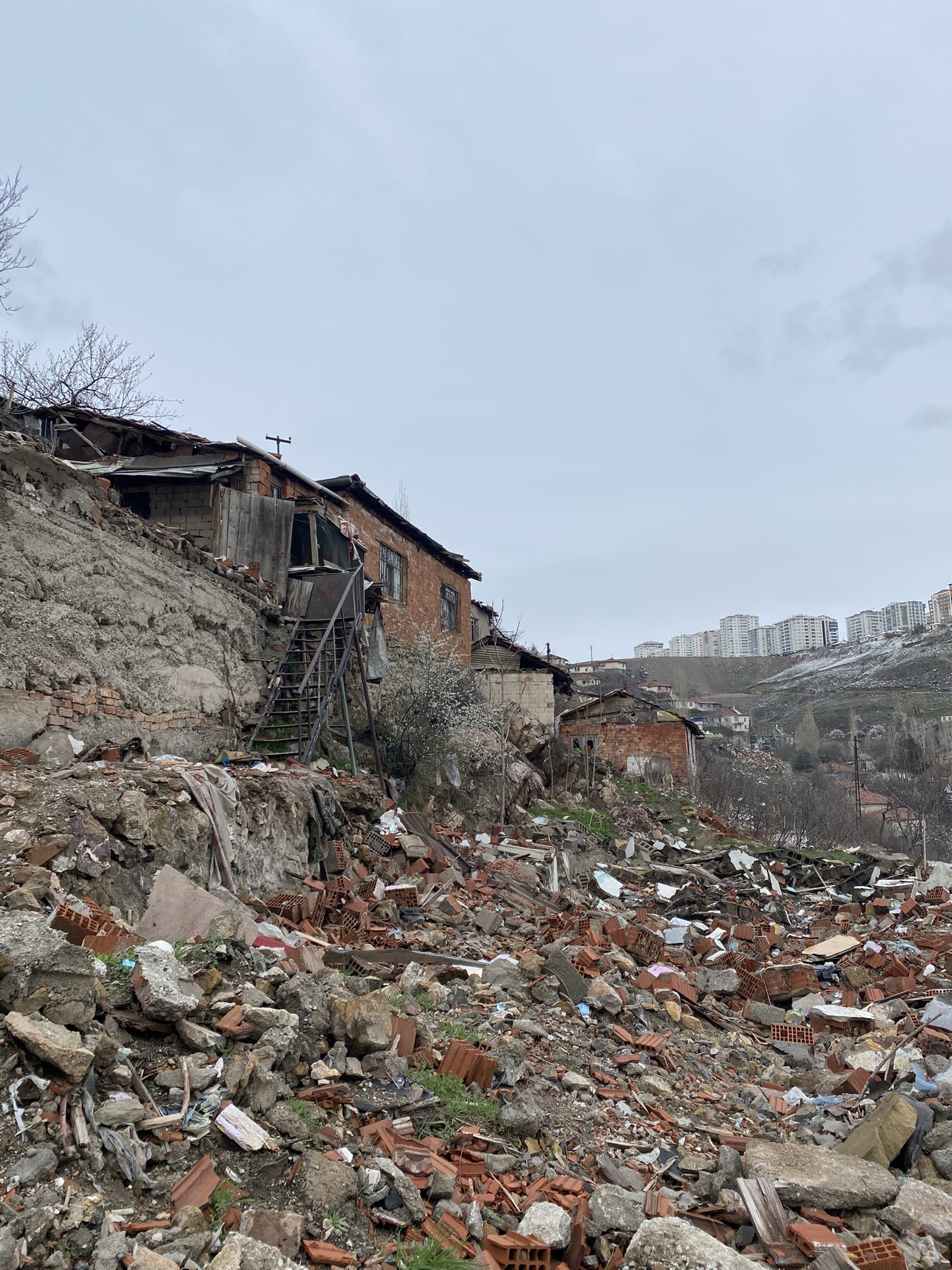
Houses that once held generations reduced to weight and volume, waiting to be removed.
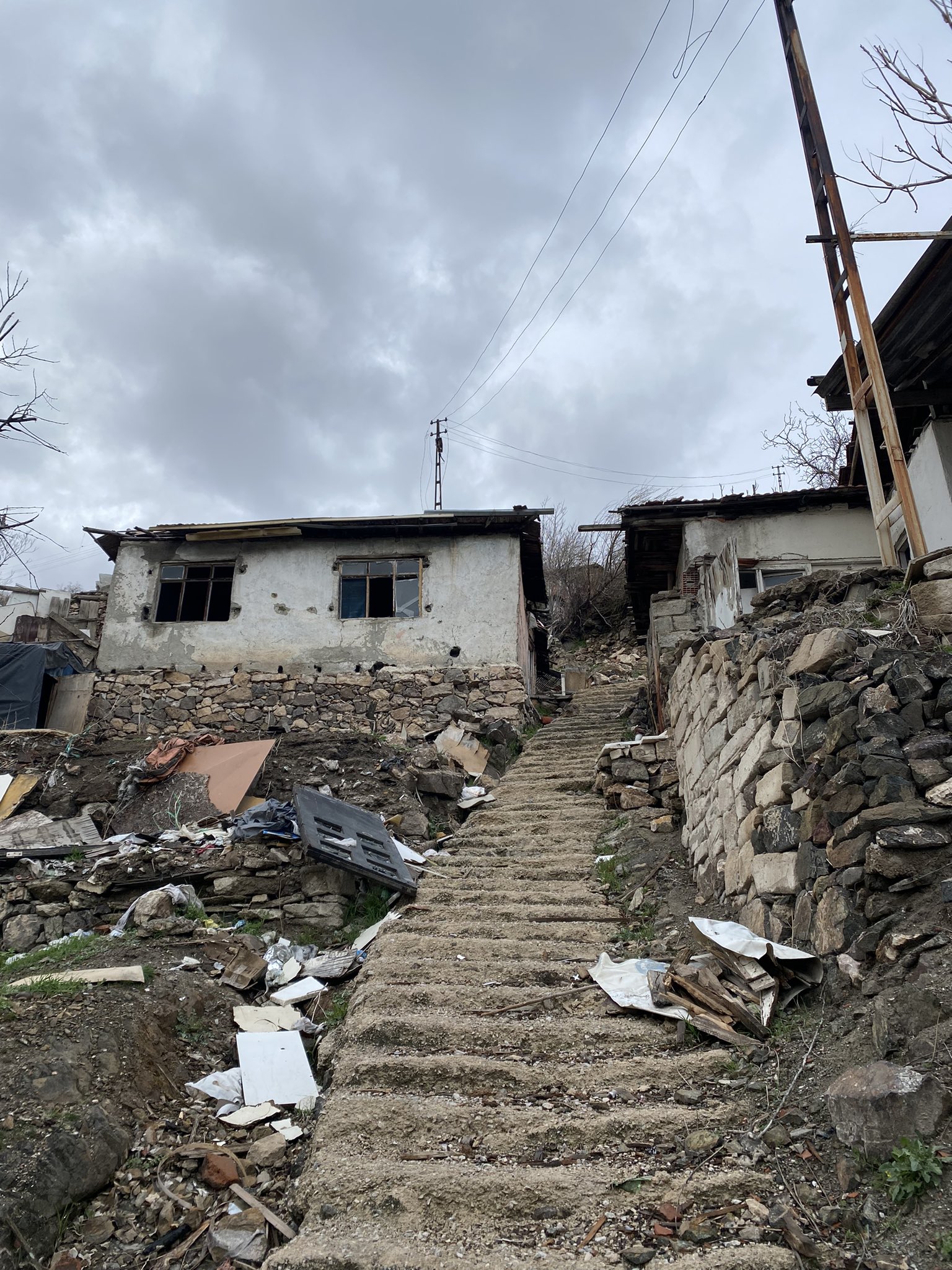

Photographs taken in Imrahor, Ankara - March 29, 2023 by Hasan Tayyar Besik
2025 clippings from my Kindle
Below is a list of my 2025 clippings from my Kindle.
A CTO’s Guide to Measuring Software Development Productivity - Amazon Web Services
Lead time measures the total elapsed time from when a customer need is first identified to when the solution delivers measurable value.
Tools of Systems Thinkers - Albert Rutherford
Linear thinking is enforced by our education system. We learn to reduce and dissect problems to smaller, more manageable components without looking at the big picture first.
We need to integrate the separate departments of knowledge into one to see how they are connected. This way, we can better understand the complex challenges of the world.
I’m about to present an example borrowed from Draper Kauffman’s introduction to systems thinking from the 1980s.
Because everything is interconnected, the whole system is comprised of a series of feedback loops. When we understand the nature of feedback loops, we can start to plan interventions to resolve the problems they create.
Key aspects of building a good model: define, expand, and aggregate.
Test your knowledge by brainstorming defined questions about your everyday life.
Our mental models are limited because our life experience is limited; we only know what we have been exposed to.
The most critical first step is that we need to leave our echo chamber.
Söylevler - Epiktetos
Hükmümüz altında olanları elimizden gelen en iyi biçimde; geri kalanlarını ise doğalarına uygun biçimde kullanmak
Yeryüzünde bedeninden ayrılmayacak tek kafanın benimki olduğunu sana ne zaman söyledim?
Daha iyisini seçtim diyorsan, bunu sana veren kim? Verilenle yetinmek için çaba göstermez misin?
Against Motivation - Laura van den Berg
You don’t even have to believe in yourself all the time if you can just believe in the process you have committed to. That steadiness of presence.
This is another thing I love about routine: you can take it with you wherever you go. Routine is a shelter. It gives us someplace to be, regardless of the moment we’re in.
Karate Science Dynamic Movement (Martial Science) - J. D. Swanson Ph.D.
Generally, there are three major ways to position the hip: front facing (shomen), half front or reverse half front facing (hanmi or gyaku hanmi), and side facing (yoko).
It is important not to think of the knees as being pushed outward or, worse, to actually do it. Instead, envision a direct connection between the outside edges of the feet and the inside of the hip.
Shime refers to the leg’s connection to the hip.
There are three principles important for executing tsuki correctly. The first is that the elbow of the striking limb rubs close to the side of the body until the elbow passes the torso. This ensures the correct muscles are connected as the technique accelerates from the hip.
Finally, it is important to develop flexibility and only kick within the limits of your flexibility.
Disaster Recovery Plan for DevOps - Daria Kulikova
Panic is the worst when it comes to a disaster.
The average downtime cost can exceed $9K per minute, which makes rapid recovery essential.
Foundational concepts of Karate
Foundational concepts of Karate-Do, integrating technique and spirit. A summary from the books:
- Dynamic Karate by Masatoshi Nakayama
- Karate Basic Principles by Paul Kuttner
- Karate Budo The Endless Search for Absolute Kime by Gilles Lavigne
- Karate Technique Spirit by Nakamura Tadashi
Karate’s story goes way back to the 6th century BCE. The monk Daruma (Bodhidharma) brought meditation and martial practices from India into China. That mix of physical training and Zen thinking shaped what would later become the backbone of many martial arts. By the Tang Dynasty, Shaolin monks had made martial arts central, and Japan was already borrowing a lot from Chinese culture, including fighting systems. Some people even suggest karate might have roots in ancient Greece before Daruma, but honestly, those theories are pretty weak.
During Japan’s feudal era, the emperor’s power faded and the warriors took over. By 1192, Yoritomo became the first Shogun, and Japan entered centuries where the sword ruled. Meanwhile, in Okinawa, weapons were banned. With no swords to rely on, people turned farm tools into weapons and developed a hidden empty-hand system called Okinawa-te. That was the real seed of karate. By the 18th and 19th centuries, Okinawan masters like Matsumora Kosaku and Higashionna Kanryo refined these methods, blending them with Chinese Quanfa. Later, Itosu Anko simplified karate, brought it into schools, and created the first real curriculum. His student, Funakoshi Gichin (1868–1957), carried karate to mainland Japan, renamed it Karate-Do (Way of the Empty Hand), and shifted the focus beyond fighting to include discipline and character.
In the 20th century, karate spread quickly. The uniform and belt system came from Jigoro Kano’s Judo, and soon karate schools everywhere were adopting them. Different styles branched out - Shotokan, Goju-Ryu, Shito-Ryu, Wado-Ryu, Kyokushin. Each with its own flavor. By the 1950s and 60s, Japanese masters were bringing karate overseas, especially to the U.S., where it exploded through dojos, tournaments, and eventually movies. Since then, karate has grown into both a sport and a way of life. Some people chase medals, others go deep into kata and philosophy. Leaders like Tadashi Nakamura (Seido Karate) and researchers like Helmut Kogel and Tetsuhiro Hokama have pushed karate forward, making sure it evolves without losing its spirit.
-
Karate-Do: Way of Life and Self-Actualisation: “Do” = path of self-actualisation; integration of body, mind, spirit / cultivates whole person, not just combat / Aim: physical, spiritual, and mental perfection / influenced by samurai ethics, Zen, Bushido / Lifelong study and self-discovery
-
Unity of Mind, Body, Spirit (Shin Gi Tai): Physical: Strength, stamina, biomechanics, expansion or contraction / Mental: Focus, awareness, strategies, emotional control / Spiritual: Character, humility, Zen-based self-discovery
-
Kime (Focus & Decision): Definition: Complete focus in technique execution / Physical: Muscle contraction, alignment, timing, breathing / Mental: Precision, coordination, tactical awareness (Maai, Hyoshi, Yomi) / Spiritual: Willpower, commitment, present-moment energy
-
Stances (Dachi): Purpose: Stable, adaptable base for techniques and movement / Key Aspects: Weight distribution, hip/knee alignment, dynamic transitions / Examples: Zenkutsu, Kiba, Kokutsu, Sanchin, Heiko, Neko Ashi, Fudo, etc.
-
Breathing (Kokyu) & Hara/Tanden: Importance: Core of power, timing, and control / Technique: Tanden-based breathing, Ibuki, pulse breathing, IAP / Spirit: Breath as unifier of body-mind-spirit; Zen/Taoist/Buddhist methods
-
Kata (Forms) & Bunkai (Applications): Kata: Choreographed sequences, essence of training / Technique: Strikes, blocks, conditioning, bunkai/oyo, kyusho, tuite / Spirit: Vehicle for calmness, harmony, “moving Zen”, mushin, zanshin
-
Kumite (Sparring) & Self-Defense: Purpose: Practical application, real-world readiness / Technique: Distance, timing, offense/defense, SSE sequence / Spirit: Self-mastery, non-violence, awareness, fighting spirit
-
Etiquette & Character: Courtesy: Bowing, uniform, respect, humility / Core: Respect, sincerity, self-control, ethical behavior / Principles: Omoiyari, Ko Gaku Shin, Fu Gen Jikko, Heijo Shin, etc.
-
Balance (Kuzushi) & Movement (Unsoku/Tai Sabaki): Kuzushi: Breaking balance (static, dynamic, mental, subtle) / Movement: Footwork, body shifts, rhythm (Hyoshi), hidden timing
-
Origins & Philosophical Influences: Okinawan roots, Chinese boxing, Bubishi text / Masters: Funakoshi, Miyagi → beyond combat / Zen & Bushido influence; “Moving Zen” / Perennial philosophy: matter → spirit continuum / Chakras/Kundalini energy model / Mantras/Kototamas: spiritual sounds for energy
[book] Hegel readings
I am surrounded by Hegel readers. I made a list for myself in this order:
- Hegel’s Phenomenology of Spirit: A Critical Guide (Cambridge Critical Guides) - Dean Moyar, Michael Quante
- The Hegel Myths and Legends - edited by Jon Stewart
- Hegel’s Idealism: The Satisfactions of Self-Consciousness - Robert Pippin
- The Preface to the Phenomenology of Spirit - Hegel
- Phenomenology of Spirit - G. W. Friedrich Hegel
- The Science of Logic - - G. W. Friedrich Hegel
[infosec] Public Pen Testing Reports
Last update is a week ago and the repo has 4.7K stars https://github.com/juliocesarfort/public-pentesting-reports
[open-science] Sci-Hub Mirrors
Sci-Hub mirrors : https://sci-hub.41610.org/sci-hub-mirrors
Most recent list
- https://sci-hub.cc
- https://sci-hub.se
- https://sci-hub.st
- https://sci-hub.se
- https://sci-hub.do
- https://sci-hub.it.nf
- https://sci-hub.es.ht
- https://sci-hub.im
- https://sci-hub.se
- http://sci-hub.tw
- http://sci-hub.si
- http://sci-hub.vk
[security] Cybersecurity experts on Twitter
Top 21 cybersecurity experts you must follow on Twitter in 2021 via Security Boulevard
[books] SRE related books I recently read and liked
1. Cloud Native Transformation, by P. Reznik, J. Dobson, M. Gienow 2019 - via O’Reilly
I do recommend to everybody who are working with Cloud, especially to consultants. Free via container-solutions.com
2. Security Warrior, by Cyrus Peikari, Anton Chuvakin 2004 - via O’Reilly
This book reveals how your systems can be attacked.
3. The Phoenix Project, Gene Kim et al. 2013 - via O’Reilly
A triller for SREs and CTOs
4. The Unicorn Project, by Gene Kim - via O’Reilly
It is again a nice novel about digital transformation developers and all kind of issues related with these two. A part II for the Phoenix Project
[software] Semantic diffs
diffsitter - A tree-sitter based AST difftool to get meaningful semantic diffs
diffsitter performs diffs on text files using the AST to compute the diff instead of using a naive text-based diff. This can give you more semantically meaningful diff information, which will prevent diffs from getting polluted by formatting differences, for example.
diffstter uses the parsers from the tree-sitter project to parse source code. As such, the languages supported by this tool are limited by the languages supported by the tree-sitter project.
A prefect diff tool shows the difference of two files semantically. It is unfortunately only for Rust language but it is very inspiring.
[paper] A paper by Google: Why container Security matters?
Understanding the container security concepts that impact your organization
TLDR;
Scream these to your developer team:
- Don’t let the shipping container imagery fool you; containers are not a special security boundary
- Containers use primitives of the Linux kernel (cgroups, namespaces) toisolate processes in an environment
- A “container image” is your application and its dependencies, and uses a “base image”as the basis for thecontainer image
- Container registries host your container images. It’s important that you be able to trust your base and container images, and that you use a private, trusted registry