August '26 - Everything I Learned
Previously: EIL August ‘26
August became an unexpectedly least physically active month. I broke my leg and had to slow down for at least a month, which left plenty of time for documentaries and my old archives.
Famous painter from a small town: Ivan Rabuzin
During a karate camp in Croatia (end of September), between trainings, I visited the home of Ivan Rabuzin, the internationally known painter from a village near Novi Marof. I love it there around Novi Marof.

Ivan Rabuzin is long gone and his son-in-law is working to preserve his house as a museum.

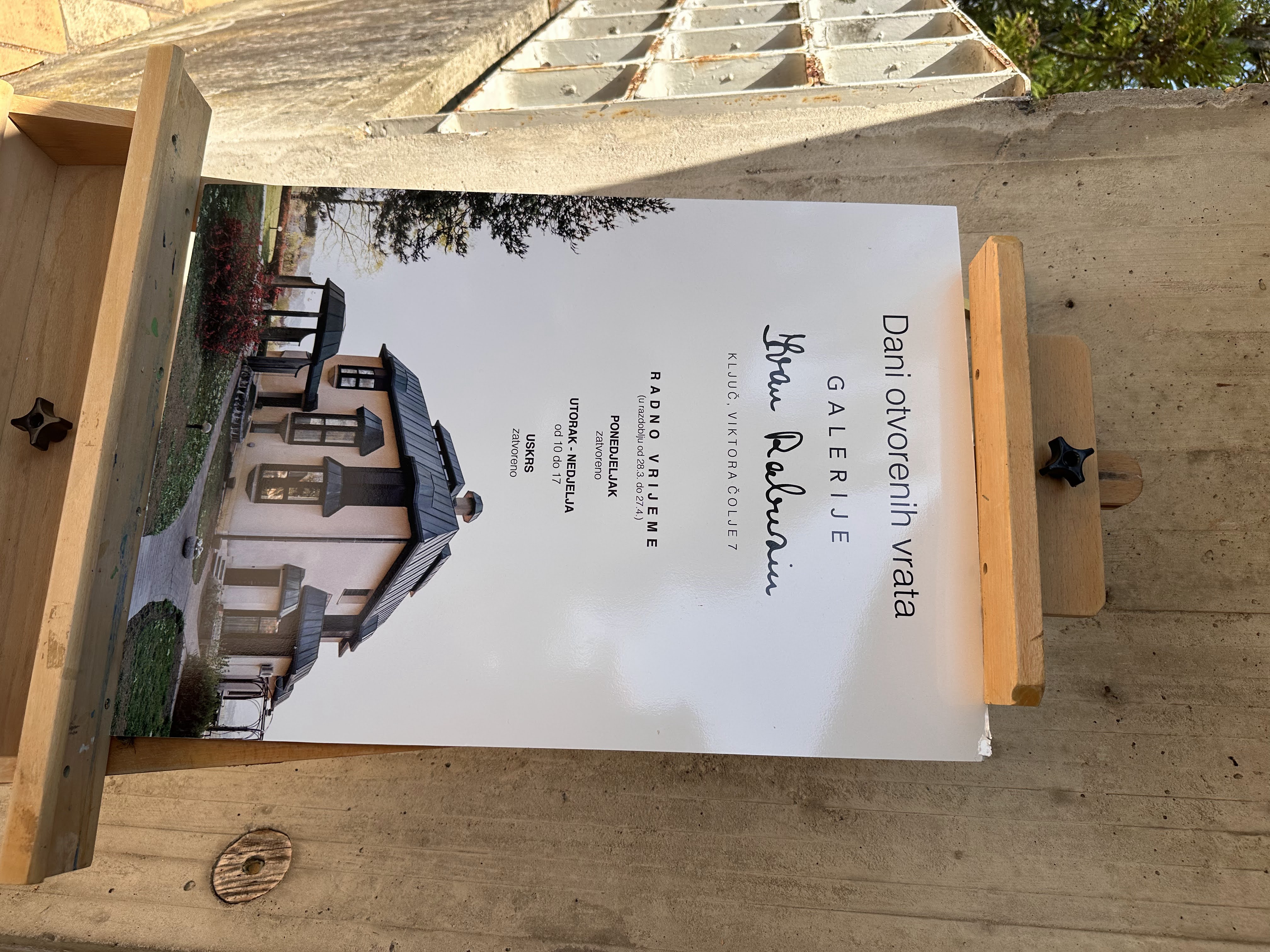
Rabuzin began as a dishwasher, learned carpentry, then turned to painting. A quick summary I learned from his son in law. I learned too many other things. They try to make the house a museum. He showed Ivan’s one of the early works was reportedly used as a chicken feeder before his work became famous. His paintings later found an audience as far away as Japan, where one was used as a theatre curtain.
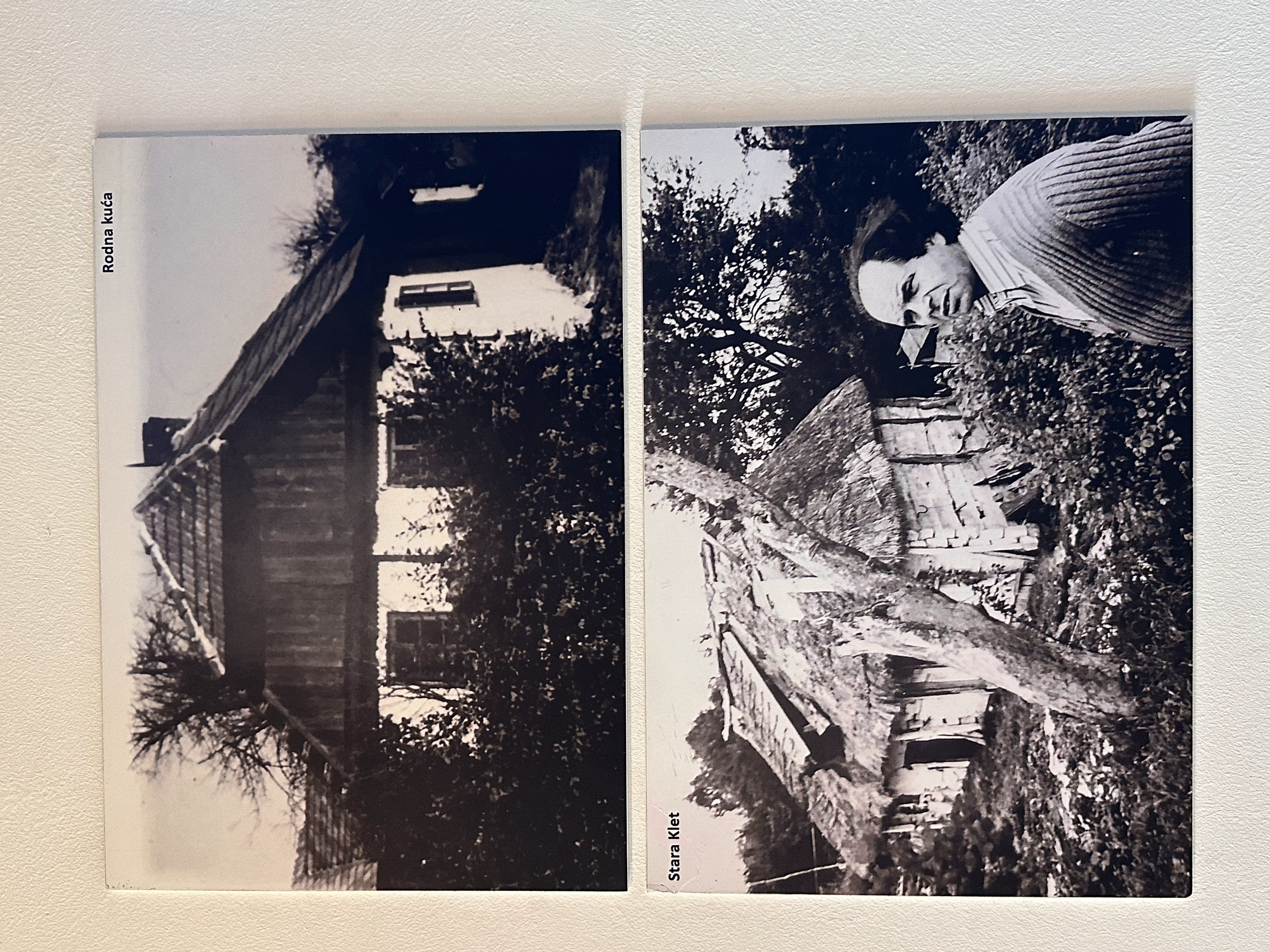
Rodna kuća - the birth house - and Stara Klet, the old cellar, before the museum took shape.
The house is as interesting as the paintings. Rabuzin helped design it and made its furniture himself: chairs, cradles, benches, too many plates and ceramicware, and a huge dining table. It reminded me of the distinctive private architectural projects of old Ankara. The house also has spectacular but humble details to show the craftsmanship.

I started loving his unique style. Check out his work https://marilyncvitanic.substack.com/p/the-art-and-inspiration-of-ivan-rabuzin
Later in the area we have realized that there are his art work on top of the plastic water bottles as well. Apparently the water company made a deal during the socialist years for one time purchase of the usage rights from Rabuzin and still using that contract.
At the garden of the house there was a metal installation looks like a very big burnt match stick.

Barkley Marathon
I started watching documentaries a lot while recovering after my broken leg surgery. Among others this one was interesting. A docu about Barkley Marathon. I love the obsessed amateur spirit, ambitious community and hard trail and along all the fun historical elements that built the trail. The founder is himself has a great smile during the entire documentary. It was a feel good documentary for a person with broken leg in recovery :)
https://www.mattmahoney.net/barkley/
From the website:
The Barkley is considered one of the toughest “100 mile” races in the world. It has (67000 feet) 20 km of climb (and 20 km of descent), more than any other 100 mile race, more than the 33,000 ft. of climb at Hardrock, and more than the 45,000 ft. at Nolan’s 14. Since the race began in 1986, less than 2% of runners have finished within the 60 hour cutoff. Mark Williams of the UK finished first in 1995 in 59:28. Here is his race report. In 2001, after several failed attempts, Blake Wood, 42, NM, and David Horton, 50, VA, finished together in 58:21, only to be disqualified for inadvertently leaving the course to follow a parallel route for about 200 yards. This route (on the south side of the stream instead of the north side) has slightly better footing and had been the normal route until 2000.
Interesting facts: In 2024 the first woman finisher Jasmin Paris said a year before “I understand now why Barkley becomes an obsession; in fact, I suspect I’m already firmly in its grip”. She attended in previous years and built an obsession.
A newsletter done properly - The positive side of the internet
https://arnoldspumpclub.com/blogs/newsletter
I subscribed to Arnold’s Pump Club about a month ago and have been very happy with it. I don’t know why I thought like that but initially I was expecting very lean opinions on muscles but whaat I got was very positive, fact checked, hoax free and non-toxic. It is a rare example of online content that is useful without becoming an irritating life-coach feed.
It offers practical information on health and muscles, often challenges health myths, and begins with “Welcome to the positive corner of the internet.” Every email also explains how it was made: the editors involved, where and how AI was used, and why a sponsor/partners appears in the text. That kind of transparency should be normal.
Oak tree is edible apparently
Berlin is home to famous historical specimens, such as the Dicke Marie in the Tegel Forest, an English oak estimated to be around 800 years old. Older than the Berlin city itself. It’s a young city in Europe at the end.
Oak trees yield edible parts, but none can be eaten raw due to toxic tannins, which cause severe digestive distress. They require proper processing first.
- Acorns (Nut): High in fats and starches. Must be shelled and leached in multiple changes of water until the bitterness is gone. Processed acorns can be roasted, mashed into porridge, or ground into gluten-free flour.
- Young Leaves: Lower in tannins when pale green in spring, but still bitter and tough. Historically used for survival or herbal tea rather than as food.
- Inner Bark: Inedible as food. High tannin levels make it strictly medicinal (used as an astringent gargle or tea for diarrhea) or for leather tanning; ingesting it irritates the digestive tract.
Pferdetreppe
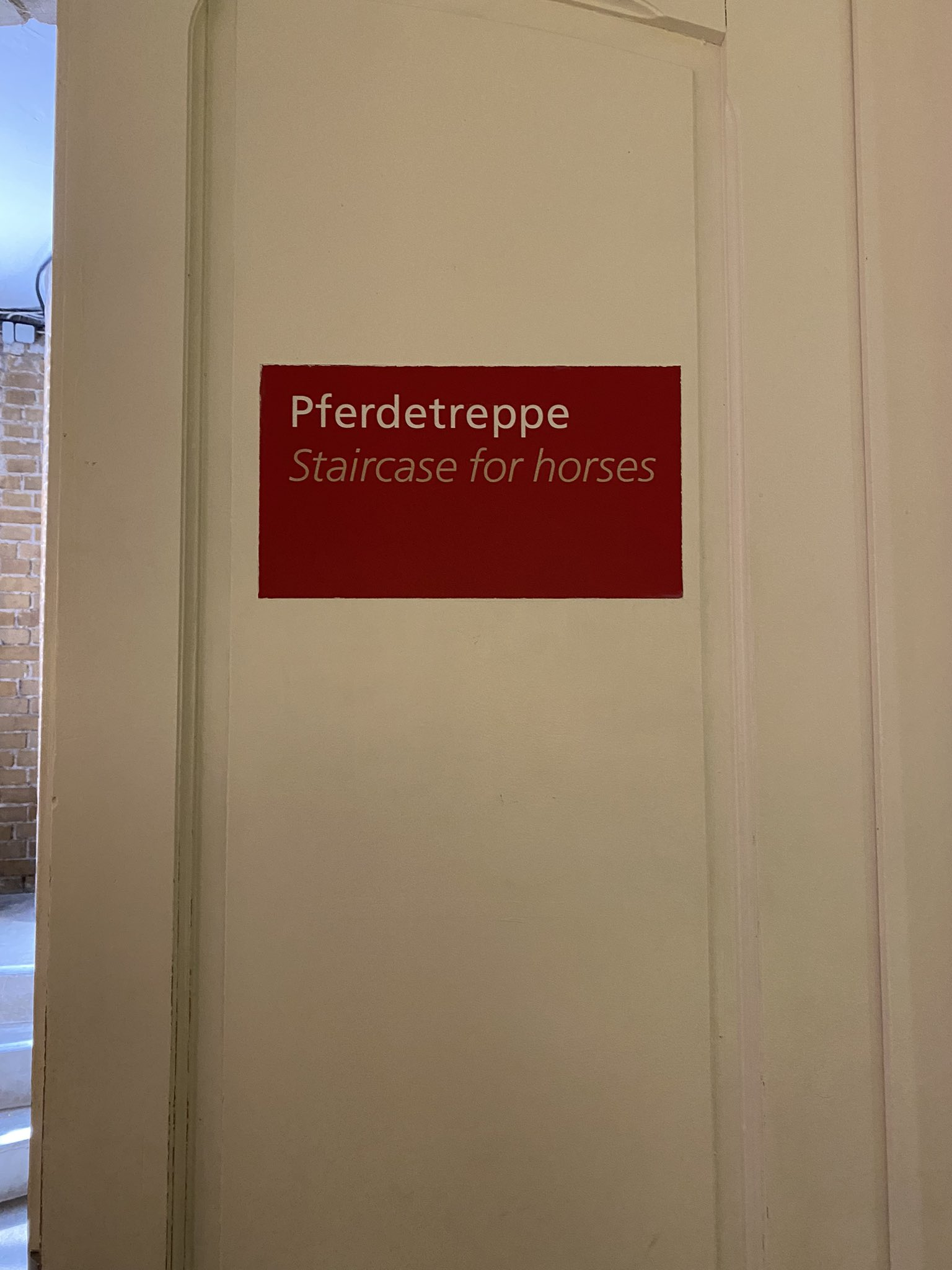
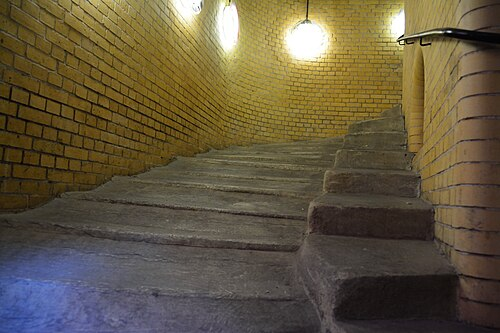
Some stairs in Berlin has a sing at their entrance saying “Staircase for horses”. At first I thought this as a literal translation of a non-typical staircase. But those were literally the staircase for horses. Here a picture from a hospital campus:
https://de.wikipedia.org/wiki/Pferdetreppe
A horse staircase is a staircase with specially shaped steps to allow its use by horses . Unlike a riding staircase , it was used in densely populated and industrialized cities of the 19th and early 20th centuries (when horse-drawn carriages were the main means of transport) to bring draft horses to the upper floors) of multi-story stables , thus enabling space-saving housing for the animals.
Prediction, language, and Markov chains
I revisited Noam Chomsky’s 2012 critique of statistical AI.
https://chomsky.info/20121101/
Chomsky’s 2012 reflection was prescient. While the statistical approach to AI achieved a level of commercial and practical success far beyond what many expected a decade ago, its core limitation persists: prediction is not comprehension. In both scientific inquiry and geopolitical implementation, treating statistical correlation as a substitute for deep structural understanding creates systems that are powerful, yet fragile and opaque.
That led naturally to Andrey Markov. In 1913, he analysed the first 20,000 letters of Pushkin’s Eugene Onegin, classifying them as vowels or consonants and measuring how one category followed another. It became the first empirical application of what we now call Markov chains. The Veritasium video is a good introduction.
In 1913, Andrey Markov conducted a study on the distribution of vowels and consonants in the first 20,000 letters of Alexander Pushkin’s Eugene Onegin, treating the text as a sequence of symbols and analyzing the statistical relationships between them. By classifying each letter as either a vowel or a consonant and analyzing the probabilities of transitions between these categories, Markov demonstrated that chains of dependent events could be rigorously modeled. This was the first empirical application of what are now called Markov chains.
The same idea appears in Google’s original PageRank: think of pages as states and links as transitions, then find the long-run probability of a random surfer landing on each page. A small interactive workbook made the connection concrete.
Noam Chomsky, a highly respected linguist, joined with two colleagues in a critique of LLMs. In addition to the issues previously discussed, they noted that LLMs’ method of learning language-scraping huge text databases from the internet-is completely different from the way children learn language. We acquire language by being immersed in the conversations and practices of human communities. This means there is ultimately no way LLMs can learn language in the way humans learn and live language-no way they can overcome the problems mentioned earlier. After iterating with ChatGPT on questions around morality and ethics, Chomsky concluded: ChatGPT exhibits something like the banality of evil: plagiarism and apathy and obviation. It summarizes the standard arguments in the literature by a kind of super-autocomplete, refuses to take a stand on anything, pleads not merely ignorance but lack of intelligence and ultimately offers a “just following orders” defense, shifting responsibility to its creators. Chomsky worried that with all the enthusiasm to incorporate LLMs into many computer applications, we will infuse this technology into many other technologies, a situation we might regret and be unable to turn off
Quotes from https://dl.acm.org/doi/pdf/10.1145/3747356
Also checkout the exercise from a book from Grand Valley State University
Janet Jackson had the power to crash laptop computers
Weird case but true
It turns out that the song contained one of the natural resonant frequencies for the model of 5400 rpm laptop hard drives that they and other manufacturers used.
Read here https://devblogs.microsoft.com/oldnewthing/20220816-00/?p=106994
Martial arts: Taido and Keysi
I started reading about Taido, a Japanese martial art founded by Seiken Shukumine in 1965. Compared with karate, its movement language feels more focused on mobility, off-axis attacks, spins, rolls, and changing levels. Instead of treating a stable stance as the default, it often turns the body into a moving target.
I also read about the Keysi Fighting Method, a close-range self-defence system built around survival in crowded, unpredictable situations. Its signature Pensador position uses the hands and elbows to protect the head and neck, while elbows, hammer fists, knees, and constant pivots become the main tools. Its visual influence is easy to spot in Christopher Nolan’s Batman films.
Also they have very cute drawings usually:
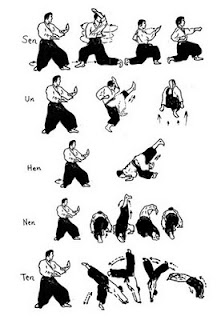
Taido (躰 道) is a Japanese martial art founded by Seiken Shukumine in 1965. The name “Taido” means “the way the body and soul” (internal and external). Taido had a relationship with Okinawa karate. First Seiken Shukumine Genseiryu karate founded in 1950, but in the 1960’s he found that the flow of martial arts, he was far away from karate, so he founded the new martial view the name of Taido
Quote from https://j2n-ma.blogspot.com/2012/08/taido.html
Key Technical Divergences:
- Movement Dynamics & Axis of Attack
- Karate: Focuses on generating maximum power from a stable connection to the ground. Energy flows through the legs, hips, and core into strikes via solid, rooted stances.
- Taido: Treats the human body like a gyroscope. Strikes are delivered mid-flight, mid-roll, or while bending the spine off-axis. A technique is rarely executed from a static upright position.
- Tactical Philosophy & Space Creation
- Karate: Employs precise distance management (Ma-ai) to intercept attacks, block-counter instantly, or absorb pressure while maintaining control of the line of engagement.
- Taido: Rejects static defense. Instead of blocking a blow, a Taido practitioner drops their torso to the mat or cartwheels sideways, using the attacker’s momentum against them while striking from a blind spot.
I also learned about Keysi Fighting Method (KFM). It is a self-defense system developed in Spain during the 1950s and 1990s by Justo Diéguez and Andy Norman. Built around street survival rather than sport, it assumes you are fighting multiple attackers at close range, often in tight spaces with no rules.
Unlike martial arts that rely on maintaining distance or standing long guards, KFM brings the fight into extremely close quarters (ultra-close range).
Things from before, and elsewhere
- The Spotlight Music Show, an Austrian youth music programme broadcast by ORF between 1968 and 1978, is full of excellent pop, rock, and folk performances. The recordings are freely available on YouTube.
- Bulgaria’s Pravetz computers were a Cold War technology story in miniature. Starting with Apple II-compatible machines and later IBM PC-compatible systems, they combined reverse engineering, state ambition, and industrial scale. For many Bulgarians, Pravetz was their first encounter with BASIC and personal computing, and remains both a source of nostalgia and a symbol of the era’s contradictions. It could be success but it couldn’t fight against popular chips after USSR fall.
- I knew roughly about Operation Condor, but did not realise how clearly its cross-border repression was documented after Paraguay’s Archives of Terror were discovered in 1992. I returned to it after translating the lyrics of “Latinoamérica” by Calle 13, Inti-Illimani, and Camila Moreno. Read more how this plan is revealed by a brave activist named Martín Almada https://es.wikipedia.org/wiki/Archivos_del_Terror
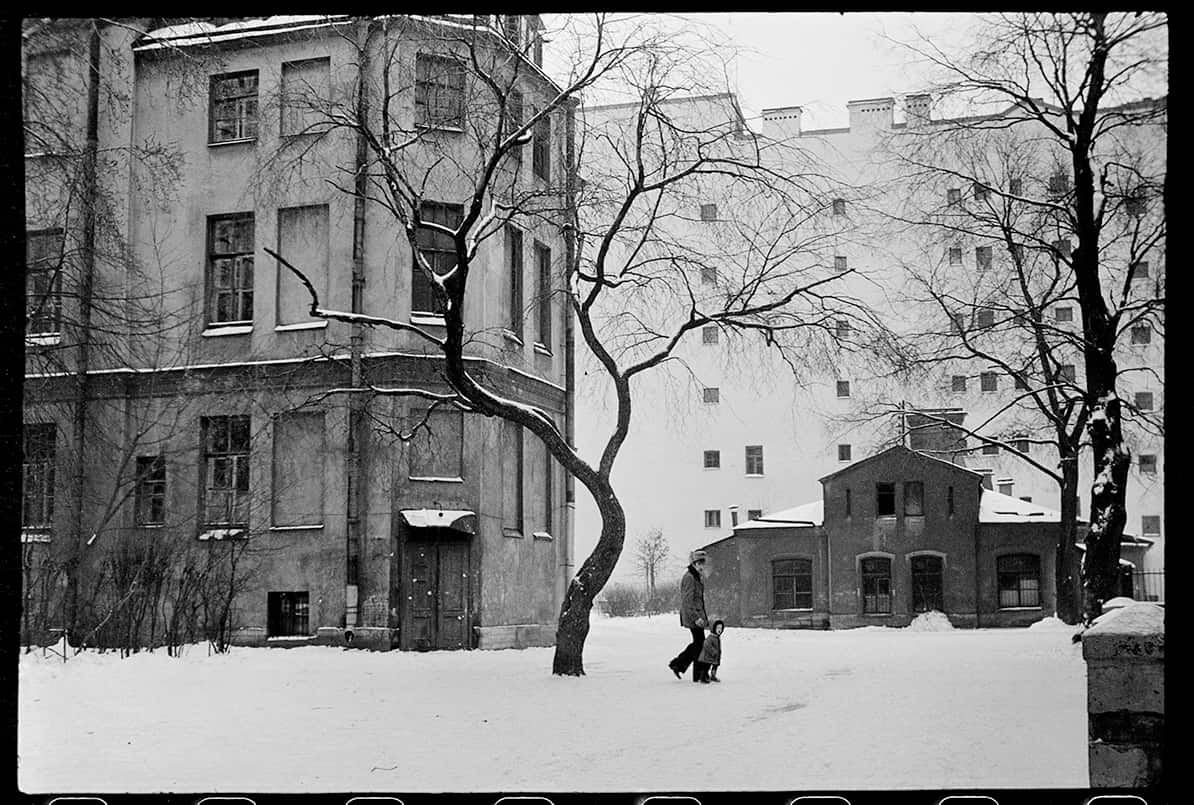
- Masha Ivashintsova was a Soviet photographer whose archive of more than 30,000 negatives was discovered by her daughter in 2017, seventeen years after her death. Her candid photographs of Leningrad, its underground artistic world, and ordinary urban life are extraordinary: mashaivashintsova.com.
Read this paper and like: “The AI layoff trap”
https://arxiv.org/pdf/2603.20617
If AI displaces human workers faster than the economy can reabsorb them, it risks eroding the very consumer demand firms depend on. We show that knowing this is not enough for firms to stop it. In a competitive task-based model of a transitioning economy, each firm captures the full cost saving from automation but bears only a fraction of the demand loss it creates in the product market; the rest falls on rivals. This demand externality traps rational firms in an automation arms race, displacing workers well beyond what is collectively optimal. The resulting loss harms both workers and firm owners. More competition and “better” AI amplify the excess; wage adjustments and free entry cannot eliminate it. Neither can capital income taxes, worker equity, universal basic income, upskilling, or Coasean bargaining. A Pigouvian automation tax can. The results suggest that policy should address not only the aftermath of AI labor displacement but also the competitive incentives that drive it.
Masha Ivashintsova (1942–2000) - a Soviet photographer recently revealed extensive photo archive
https://mashaivashintsova.com/
Masha Ivashintsova (1942–2000) was a Soviet photographer whose extensive archive of over 30,000 negatives remained completely undiscovered until 2017. Often referred to as the “Russian Vivian Maier,” she spent decades capturing everyday life, political atmosphere, and the artistic underground of Leningrad (St. Petersburg) without ever showing her work to the public.
• Underground Artistic Circle: Ivashintsova was heavily immersed in Leningrad’s non-conformist movement between the 1960s and 1980s. She had close relationships with prominent figures of the Soviet underground, including poet Viktor Krivulin, photographer Boris Smelov, and painter Boris Akselrod.
• Involuntary Commitment: Because she did not maintain official state-sanctioned employment and lived outside Soviet societal expectations, she was subjected to punitive psychiatry and involuntarily committed to a Soviet mental hospital for ten years (1981–1991).
• Discovery of Her Archive: In late 2017, 17 years after her death from cancer, her daughter Asya Ivashintsova-Melkumyan discovered box after box of undeveloped rolls and film negatives in an attic.
• Photographic Style: Her work features candid street photography, raw urban landscapes of Leningrad, intimate portraits of underground figures, and melancholy self-portraits. She shot predominantly on Leica and Rolleiflex cameras.